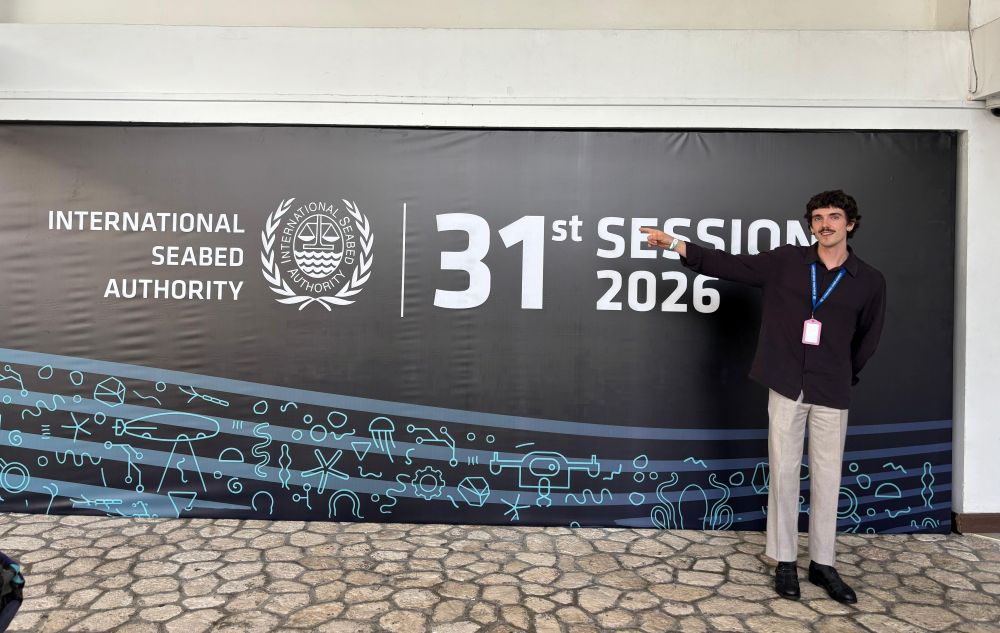
Our researcher Emil W. Hildebrand attended the 31st session of the Council and Assembly of the International Seabed Authority from July 13-31, 2026, in Kingston, Jamaica. In this blog post he offers his reflections on the litigation cases against the ISA from two of its contractors, how data collected within the international regime is used for unilateral action, and the state of play in the world of deep-sea mining.
Written on site by Emil W. Hildebrand
This activity is conducted as part of a Collaborative Event Ethnography (CEE) effort under the TwinPolitics project, led by Prof. Alice Vadrot and funded by the European Research Council. Other venues include BBNJ negotiations, the Intergovernmental Negotiation Committee for a global Plastics treaty (INC) and the Convention on Biological Diversity (CBD). A special thank you is extended to The Ocean and Us for providing on-site access to the 31st session of the ISA through their observer status.
Slow and steady does it
Sometimes it is wonderful to watch the wheels of multilateralism in action, sometimes it is impressively frustrating. My second trip to the International Seabed Authority provided a bit of both.
Having just returned from Kingston, Jamaica, where the second part of the 31st session of the ISA took place, I find myself with mixed impressions. For its sometimes-slow pace, the Council did genuinely make progress in developing the Mining Code – the rules and regulations for deep-sea mining in international waters – including progress on environmental management and monitoring, pilot mining and test mining, underwater cultural heritage, and some much-needed discussions on the annexes, to name a few.
The regulations are still a long way from being finished; Not to mention other vital elements of a future deep-sea mining regime, including the additional standards and guidelines, the operationalisation of the Enterprise, the Economic Planning Commission, and the establishment of a benefit-sharing mechanism. But when developing a whole new industry seeking to extract our common heritage of humankind, I think we can all agree that slow and steady does it.
Some things work better than others at the ISA. Time-management, for example, is an area with room for improvement. Assembly spent 43% of its one-week meeting on opening statements (see Figure 1, Item 9), taking away valuable time which could have otherwise been used to discuss important overarching and strategic issues. Assembly, designated as the ‘supreme organ’ of the ISA under the UN Convention on the Law of the Sea (UNCLOS), is the forum where high-level debates are supposed to take place. It has the power to establish general policies and to ‘consider problems of a general nature in connection with activities in the Area’ (UNCLOS, Article 160 2(k)). In other words, Assembly is where overarching issues may be discussed and where the general direction of the ISA may be set.
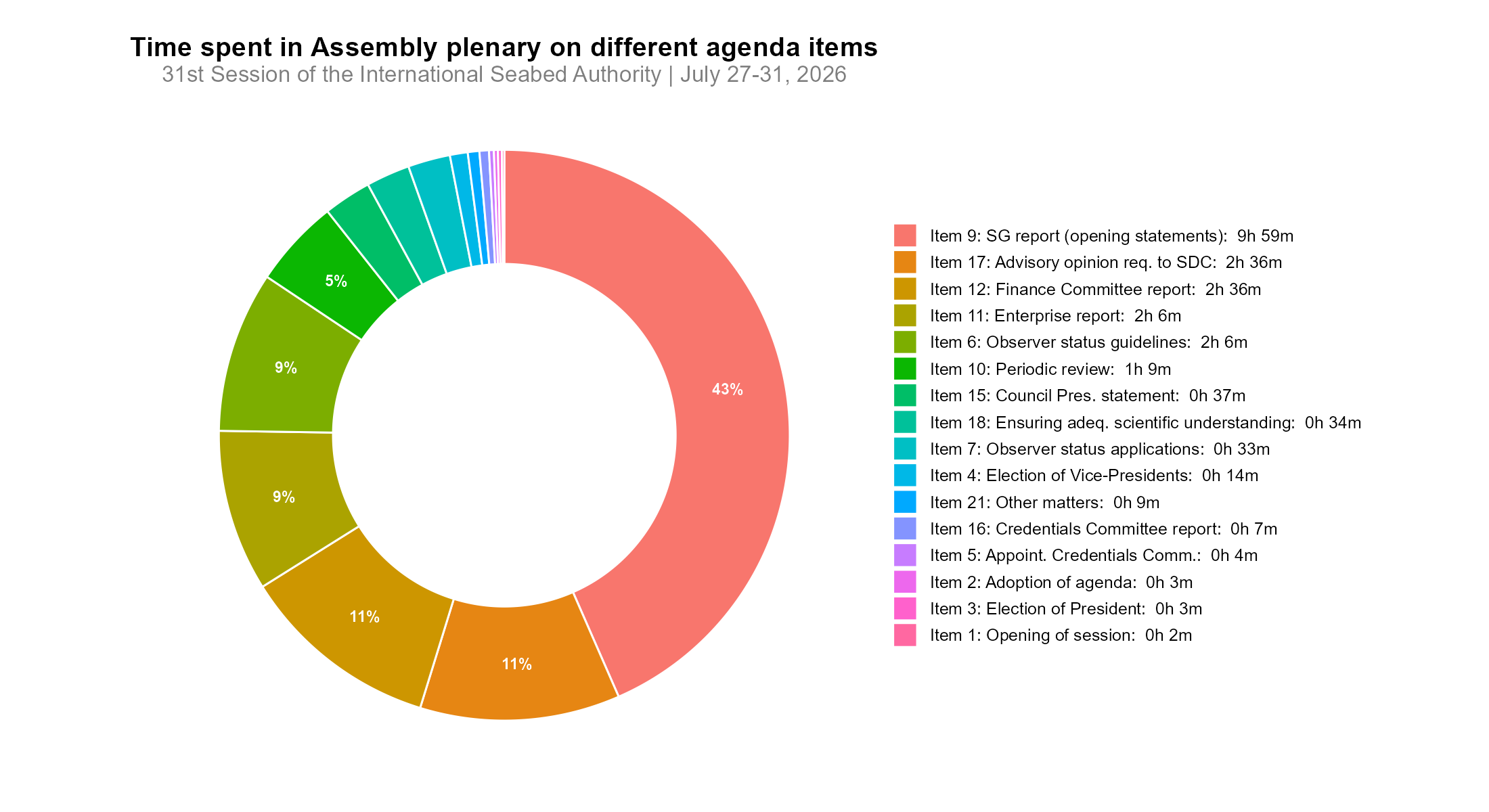
Figure 1: Time spent in Assembly plenary on various agenda items.
One such issue was the proposed Item 18 on the agenda from Vanuatu on ‘Ensuring adequate scientific understanding to support informed decision-making’, including a draft decision commissioning a report on knowledge gaps for informed decision-making. Such a report would be timely and could open the space for a genuine discussion in Assembly on what knowledge is still needed before commercial exploitation can be considered. The item only received 30 minutes of elaboration in plenary and the decision was deferred to next year. Vanuatu will continue the work intersessionally.
Another issue which was not on the agenda, but which multiple states has called for an open discussion on, is the already mentioned benefit-sharing mechanism. Such a mechanism would be a cornerstone of the common heritage principle underpinning the ISA’s work but has yet to be discussed meaningfully in either Council or Assembly.
With only one week a year for Assembly meetings, I wonder if managing the time differently could open the space for having some of these important debates.
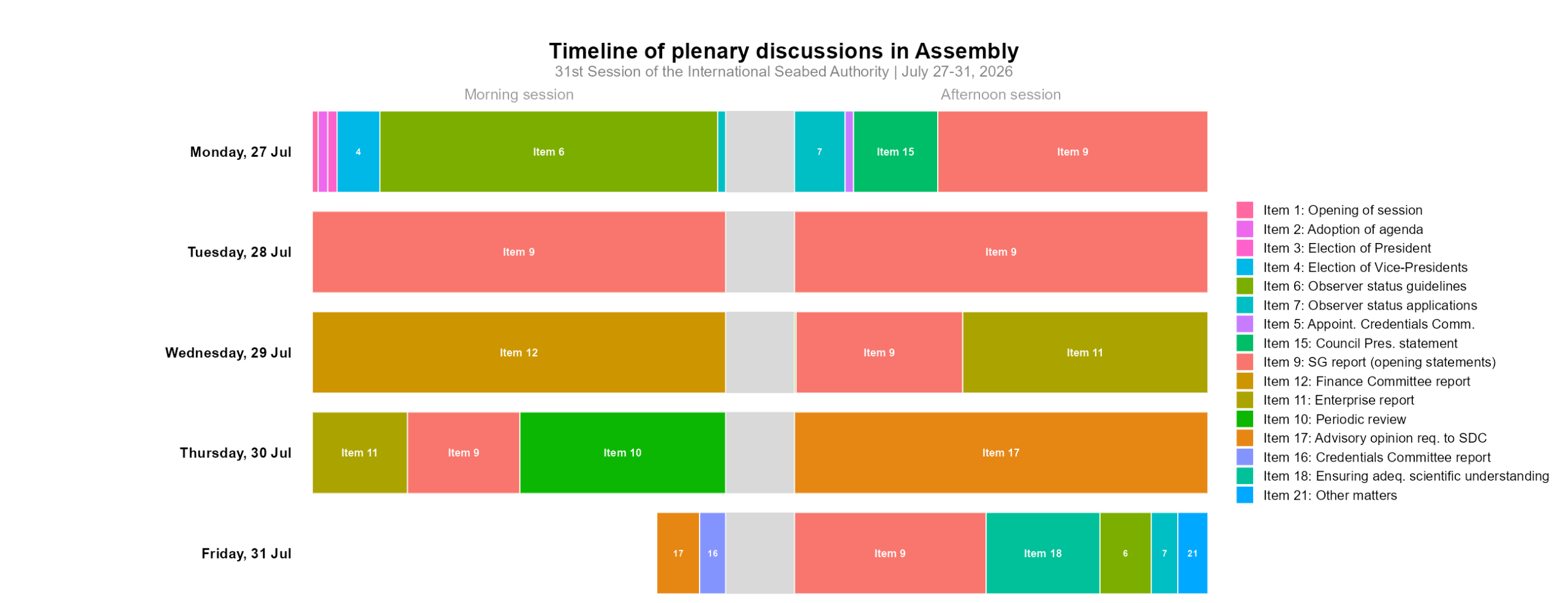
Figure 2: Timeline of agenda items discussed in plenary of Assembly. Most of the morning session on Friday was spent in closed-door informal meetings.
Complaints aside, I find it positive that the international community meets multiple times a year to engage in more or less constructive discussions on the future of the international seabed (the Area). It is certainly better than going rogue, like the US administration decided to do last April when they opened for deep-sea mining in international waters unilaterally.
How about we sue you?
Which brings me to the real blue whale in the room of this year’s session: The litigation cases brought against the ISA by Nauru Ocean Resources Inc. (NORI) and Tonga Offshore Mining Ltd. (TOML) in front of the Seabed Disputes Chamber (SDC) at the International Tribunal for the Law of the Sea (ITLOS). The case is complex, but in essence it goes like this1:
Immediately after the US opened for exploration and exploitation contracts under US law, the US subsidiary of Canadian mining company The Metals Company (TMC US) handed in their applications for mining exploration and exploitation in the Clarion Clipperton Zone (CCZ) in the Pacific Ocean. Importantly, two other TMC subsidiaries already hold exploration contracts with the ISA in the same areas, under the sponsorship of Naoero (formerly Nauru) and Tonga: NORI and TOML. In short, TMC wants to pursue deep-sea mining in the same areas with the blessing of both the US and the international system simultaneously – a position that seems not only legally absurd but also like an incredible display of scrupulous corporate opportunism.
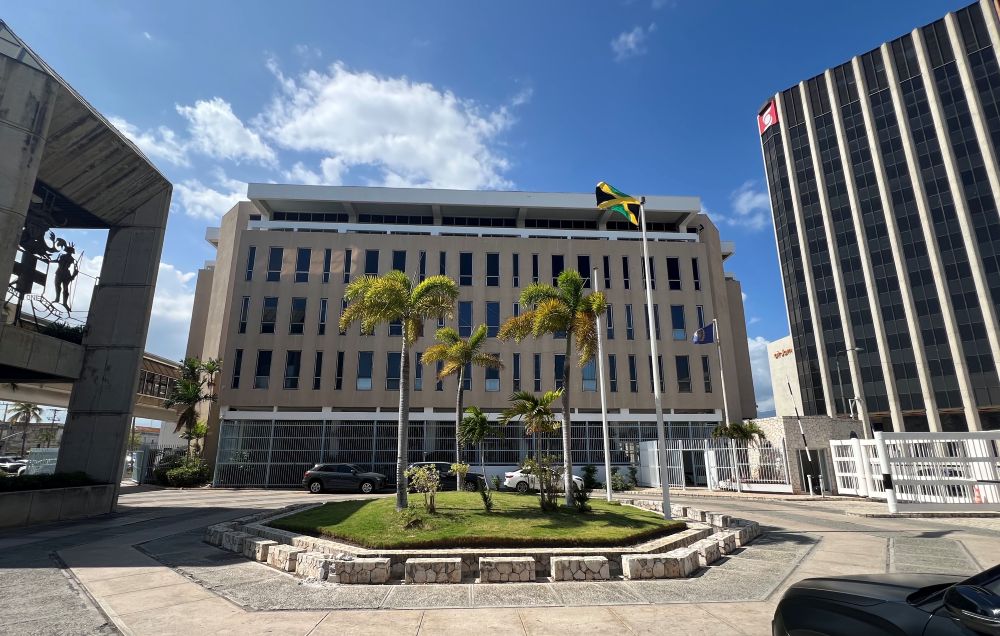
ISA headquarters in Kingston, Jamaica (credit: Emil W. Hildebrand)
Understandably, the international community was not happy. In July, after long closed-door meetings, the Council formally requested its subsidiary body the Legal and Technical Commission (LTC) to investigate what is going on and what can be done about it. The LTC proceeded to ask all contractors something along the lines of: “Is anyone here doing anything that might amount to a complete breach of international law or a full subversion of the very purpose of the ISA itself?”.
We don’t know exactly what each contractor answered, but I assume most of them responded with something like a simple no.
TMC, on the other hand, responded by suing the ISA. Twice.
To be precise, its subsidiaries NORI and TOML brought the ISA in front of the SDC after the LTC pointed them out specifically as requiring ‘specific attention’ following the LTC’s first round of inquiries. NORI and TOML argued their cases on the grounds that they felt singled out (which, to be fair, is exactly the point) and that they had not been given a due process in the inquiry. They wanted the whole investigation suspended.
That is where the process stood as the Council (and myself) arrived in Kingston this July, before the SDC delivered its preliminary reading of the case. So far, so technical.
But there is one more piece to the puzzle that raised the stakes considerably. This year, together with several other contractors, NORI’s exploration contract in the Clarion Clipperton Zone was up for extension. Normally, such extensions get accepted without much fuzz by Council on the recommendation of the LTC. This year, however, it seems like NORI was understandably nervous that their contract extension would not go so smooth. Hence the introduction of what is a classic move in the business world, but less so at the multilateral level: the lawsuit.
On the Saturday before the second week of Council the SDC delivered its reading on the case. Long story short, the SDC asked the ISA to ensure due process during its inquiry and, centrally, asked Council not to allow the LTC inquiry to influence its decision on the extension of NORI’s contract. None of the parties should do anything that might lead to ‘aggravating the dispute’. The inquiry is allowed to go on.
Take the data and run
Here at the TwinPolitics project, we don’t normally concern ourselves with legal cases. There is, however, a central data angle to this whole kerfuffle.
One component of the non-compliance argument is the fact that TMC, through its subsidiaries NORI and TOML, have collected massive amounts of data on the areas of the CCZ they now seek to mine under US law.
As the vice-president of Naoero proudly stated during Assembly, their sponsored contractor NORI has collected close to a petabyte of data in its contract area, making up about a third of all the data hosted in the ISA’s DeepData database. TMC has enjoyed exclusive access to these areas of the CCZ through its two exploration contracts with the ISA, making the data collection possible in the first place. Without this data, the argument goes, TMC US would not have had the knowledge, expertise, or geographical or environmental data needed to pursue mining contracts under US law. In other words, the alienation of data obtained by TMC under the ISA regime is what enables their unilateral action.
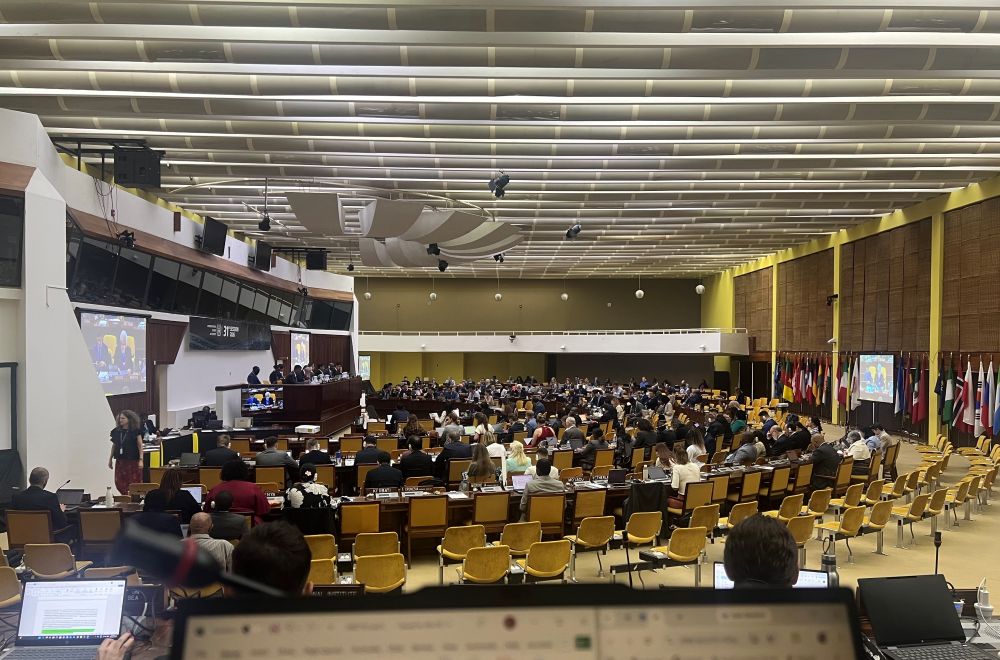
View from the observer bench (credit: Emil W. Hildebrand)
This dynamic spotlights the high value of deep-sea data, and the often highly political nature of it. Beyond the wealth of indigenous and local knowledge about the deep sea, scientific data is the only way available to us to know these remote areas: what is down there, how it works, and how our activities may affect it. Very few of us will ever have the opportunity to experience the deep sea for ourselves, and collecting deep-sea data is neither simple nor cheap. This means that deep-sea data is valuable.
TMC has in effect extracted this value from the Area, enabled by the very regime established to ensure its non-appropriation.
The situation is only made worse by the fact that both NORI and TOML have exploration contracts in areas reserved for developing states. Half of all proposed mining areas under the ISA regime are reserved for developing and geographically disadvantaged states – the so-called ‘site-bank’ principle – to ensure their participation in activities in the Area and the benefits derived from these activities. It seems clear that any data collected under this regime should also stay within it. The site-bank system was certainly not meant as a way for private companies from the global north to lay claim to an area until they have collected enough data to move on elsewhere, which is what TMC seems to be doing.
Let’s call a spade a spade
What happened to NORI’s exploration contract in the end? With the decision of the SDC looming over the plenary room, no state dared to open a discussion at this time, and no one in Council raised a formal objection to the extension. Many delegations stated clearly, however, that the separation of the two processes goes both ways: Regardless of the extension, Council may act as it sees fit on the outcome of the LTC’s inquiry, whenever that may be finished.
From the outside, the case seems painfully clear: TMC cannot benefit from the international regime while actively working against it. You don’t need to be a legal expert to see that TMC’s activities go against the very foundational principles of the ISA. It is frustrating sometimes to watch the intricate dance of diplomats engaged in collectively beating around the proverbial bush. It would certainly be refreshing to hear states calling out TMC, NORI, and TOML directly; to see them point some fingers at what from the outside at least looks like blatant bad faith behaviour.
Of course, due process and the rule of law must be kept, and for the legitimacy of the system we should not rush things or discard the fundamental procedures that underpin multilateral processes. Especially with the SDC ruling hanging over the Council, states are careful not to aggravate an already sensitive inquiry process. But I think there is a time and a place for acknowledging the political nature of even the most technical of debates. In the end, TMC is using the international system for its own benefit, while hampering a negative response from its regulator by way of litigation.
Let’s call a spade a spade.
I for one hope that the ISA and its member states will show some decisive action in this case, at the very latest once the LTC inquiry delivers its findings. TMC’s behaviour also seems to be a case where, for once, even the most disagreeing of states might be able to see eye to eye: Whether they are pro-mining, anti-mining, or somewhere in-between, I believe most states would agree that whatever happens to the international seabed should happen under the jurisdiction of the ISA.
Now we just have to wait and see what the LTC’s inquiry amounts to and, when the time comes, what the ISA decides to do about it. We will be following closely.
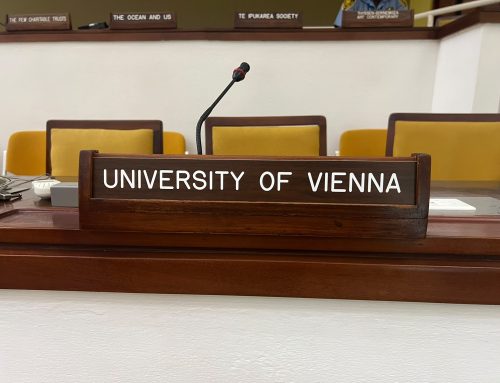
PS: On a happy note, the University of Vienna now has official observer status at the ISA. That means that from next year on, we will be able to attend Council and Assembly meetings under our own badge and sitting on our own seat
1A disclaimer: I am not a lawyer, and this is not a legal reading. Please refer to more qualified commentators for the legal specifics.