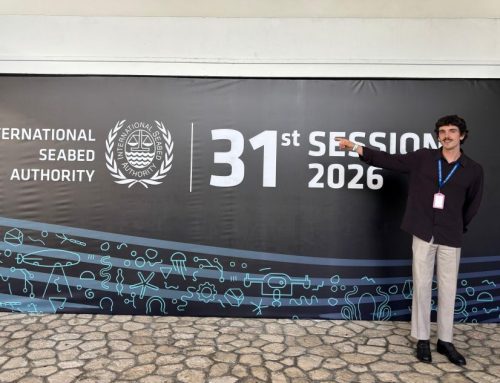
On April 15, 2026, the Environmental Politics Research Group and the ERC Project TwinPolitics hosted a workshop bringing together current research on international organizations, institutional change and multilateral reform, with a view to exploring how research can contribute to better understand and address current challenges. This blogpost summarizes the workshop contributions and the preceding lecture by Prof. Rakhyun Kim on institutional paralysis.
Written by Arne Langlet-Uranüs, Lise H. Andersen, David Gazsi, Kiyan Hakim,
Emil Wieringa Hildebrand, Wenwen Lyu, Moritz Petersmann
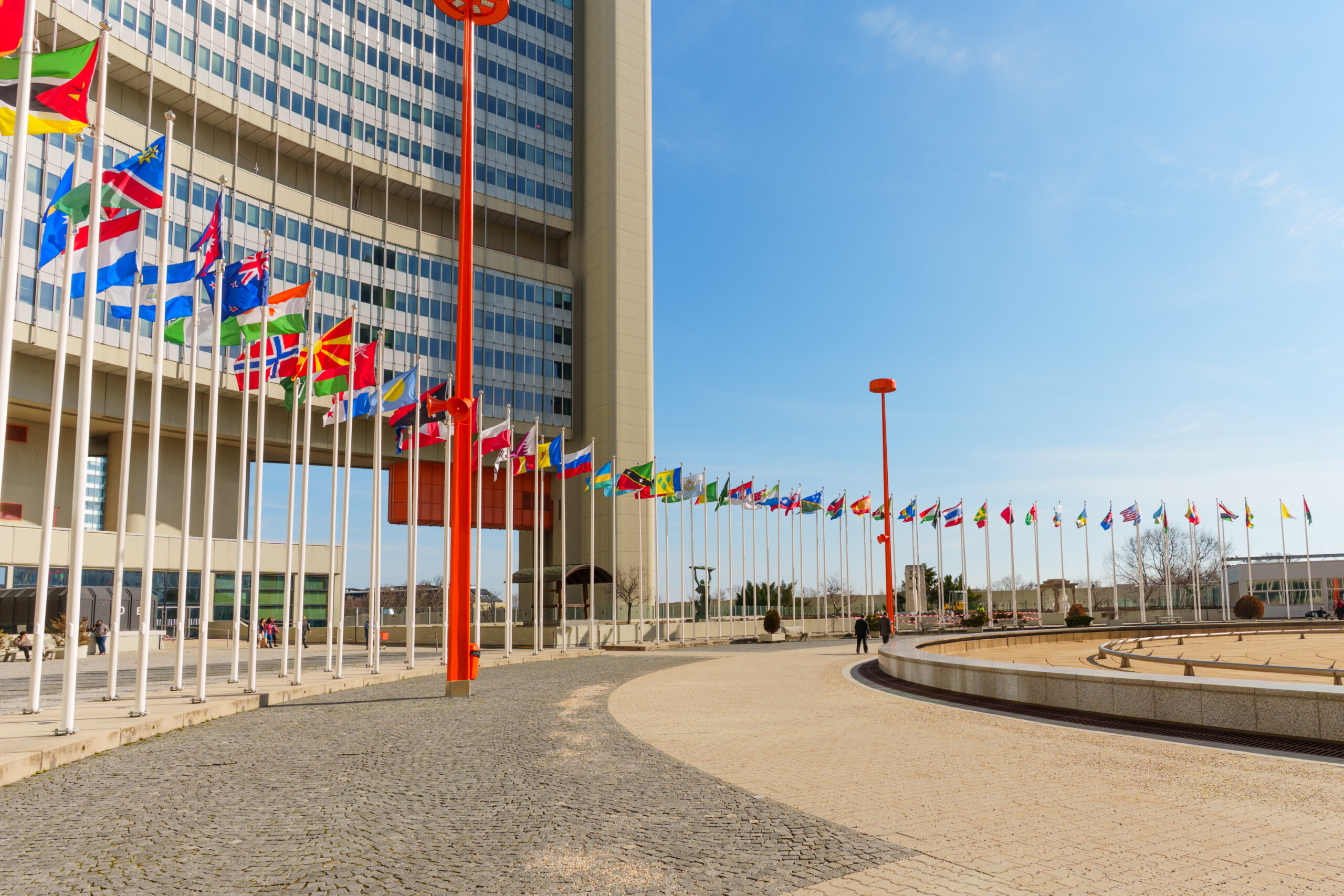
The Vienna International Centre – one of the three UN Headquarters © Adobe Stock
International organizations (IOs) are at a crossroad: they face increasing challenges in recent years – from individual populist leaders and governments, through increasing regime complexity and organizational overlaps. The UN is undergoing the UN 80 reform (UN 2025) – driven by immense external pressure and financial cuts. Some IOs appear paralyzed or ineffective (Kim & Bridgewater 2025). While there is widespread recognition that international organizations need to change, or possibly even be dismantled , there is also the recognition that contemporary issues – from climate change, pollution, and biodiversity loss, to artificial intelligence or pandemics – are global and require multilateral solutions and that there is no good alternative to the UN (Bridgewater et al 2024).
The starting point of the workshop was a lecture by Prof. Rakhyun Kim from the University of Utrecht on a recently observed phenomenon Kim calls “institutional paralysis” that describes how some environmental IOs when trying to respond to challenges may become more active than ever, while struggling to deliver tangible outcomes. The lecture explored the apparent mismatch between the accelerating complexity of global problems and the limited capacity of institutions to adapt and coordinate.
During the workshop, researchers agreed that IOs may serve important functions even when they do not deliver tangible outcomes. Lise H. Andersen from Leiden University highlighted how multilateral processes can play a stabilizing role in and of themselves. Ongoing negotiations – such as those on cyber governance at the United Nations – demonstrate how structured disagreement can still constitute progress by maintaining dialogue, revealing and organizing contestation, legitimizing diverse positions, enhancing knowledge and preserving shared diplomatic spaces. While substantive progress may not always be achieved in the form of outcome reports or treaties, multilateral processes offer a recognized and common frame of reference where disagreement can be captured, organized and managed on a longer-term basis. Indeed, in an increasingly fragmented geopolitical landscape, multilateral processes may come to function less as sites of consensus-building and more as infrastructures for managing enduring contestation.
One common response to current challenges in the international system are calls for increased cooperation and coordination among IOs, using synergies and avoiding so-called turf wars. When exploring the theme of possible cooperation and coordination between IOs, Wenwen Lyu and Emil W. Hildebrand from the ERC TwinPolitics project presented ongoing research that looks at IOs themselves as actors in the system that create (cooperative or conflictual) relations among themselves. Their presentation showed how IOs adapt when the density of institutional arrangements increases. In the case of marine biodiversity governance, the emergence of the Agreement on Marine Biological Diversity of Areas beyond National Jurisdiction (BBNJ Agreement) reshapes how existing organizations interact, forcing them to adapt, cooperate, or compete within the system of high-seas governance. This dynamic is reflected in the actions and statements of IOs with mandates overlapping the BBNJ Agreement. The Convention on Biological Diversity (CBD), for example, has taken a proactive stance by organizing workshops on cooperation with BBNJ and expressing its willingness to support the implementation of the BBNJ’s package elements. The Food and Agriculture Organization of the UN (FAO), however, has emphasized that the cooperation arrangements should reinforce, not fragment or undermine existing institutions. Understanding how and why responses from existing IOs differ would offer valuable insight into ongoing debates on cooperation between the BBNJ and other IOs, as well as into the broader landscape of international organisations.
In an effort to avoid institutional paralysis, institutions also seek to adapt to a changing political environment. Moritz Petersmann from the University of Eastern Finland presented his ongoing research on how the Intergovernmental Panel on Climate Change (IPCC) have undergone change in aiming to become more “policy relevant”, without being “prescriptive”. In the post-Paris climate regime, the IPCC is prompted to react to its changing institutional environment. Particularly, a temporal challenge to align with policy timelines of the United Nations Framework Convention on Climate Change (UNFCCC), a spatial challenge to provide nationally relevant knowledge, and an epistemological challenge to shift toward solution-oriented assessment practices test the IPCC’s resilience. The IPCC’s responses to these challenges reveal that the organization is drifting toward diminished policy relevance due to its persistent inability to adjust to the timeline of the 2028 Global Stocktake. Such resistance to change increases its vulnerability instead of promoting its resilience. However, there are also signs of IPCC’s adaptive and transformative capacities, although limited. For example, the IPCC evolves toward solution orientation but retains foundational epistemic and procedural norms. As a result, presented solutions remain within the ecomodernist paradigm instead of including diverse forms of knowledge and values.
A common theme of the presented research was the need to address the politics within IOs which shape how international organizations function. Kiyan Hakim from the University of Vienna highlighted that major powers effectively have the choice between three different types of behaviour: compliance, instrumentalisation or circumvention and their choice seems to relate to the centrality of the IO at hand. The US’ interaction with global financial governance serves as a relevant example, as the artery of financial flows and the institutions set in place to regulate them are heavily dependent on unilateral US policy. We see a stark contrast between the theory that interdependence creates binding institutions that hegemons have to comply with and the reality that these interdependencies get weaponised to either influence IOs or paralyse them entirely. As such, depending on their strategic interests and security saliency, institutional architecture and complexity, as well their own centrality within a network, major powers may comply with, instrumentalise, or circumvent international institutions. Therefore these different structural conditions can lead to drastically different great power behaviour in relation to IOs. This may include complying with institutions even when their interests don’t align with the outcome, deciding to shop for more “minilateral” forums in which they have more influence that they can instrumentalise, or circumvent global governance unilaterally – potentially paralysing the multilateral frameworks in the process. Understanding under which conditions institutions successfully mitigate unilateralism and constrain great powers may prove to be important in future institutional architecture.
Meanwhile, the rise of authoritarian populism challenges the legitimacy of multilateral institutions more broadly and demands new responses from IOs – such as possibly shifting toward more informal, technical, and low-visibility forms of cooperation that can operate effectively under the political radar, while still fostering coordination and norm diffusion. David Gazsi from the University of Vienna presented his research on the meso-sectoral networks of the European Union. While its high-visibility central institutions, responsible for macro-political decision-making, remain subject to authoritarian populist (AP) contestation due to their liberal-normative frameworks and presumed threat to national sovereignty, the EU’s meso-sectoral networks are hardly ever affected. For instance, over the past decade, we witnessed AP governments from member states like Hungary or Poland posing enormous obstacles to decision-making within the Council of the EU, at times causing complete paralysis when decisions of strategic importance were to be made. Simultaneously, AP governments in EU candidate countries, such as Serbia or Georgia, contested basic EU values and norms to the extent that the accession processes of their countries got stalled and their macro-political contacts with the Union were suspended. Simultaneously, however, expert representatives of all of these countries remained constructive participants in EU-led professional networks across various policy areas, such as criminal justice (EUROJUST), disease prevention (ECDC), medicines regulation (EMA), border management (Frontex), etc. Importantly, participants of these networks undergo considerable professional socialisation and engage in wide-scale integration in their day-to-day practical work. And all of that on the basis of the EU’s otherwise contested liberal-normative framework.