The third meeting of the Preparatory Commission (PrepCom3) to the BBNJ Agreement took place at the UN Headquarters in New York from 23 March to 2 April 2026, carrying much hope and ambition following the Agreement’s entry into force on 17 January 2026. While notable progress was made, several regional groups voiced disappointment in their closing statements. This raises critical questions: what has PrepCom3 actually delivered? And are delegates on track toward COP1?
Written on site by Wenwen Lyu
This activity was conducted as part of the Collaborative Event Ethnography (CEE) under the TwinPolitics project, led by Prof. Alice Vadrot and funded by the European Research Council. Wenwen Lyu has covered the BBNJ negotiations intensively throughout the year. You can find her work on BBNJ PrepCom1 and 2 here and here.
In addition to BBNJ, other venues of research include the International Negotiating Committee (INC) on a Plastic Treaty and the International Seabed Authority.
New York’s weather in late March is highly unpredictable, swinging abruptly between winter chill and early summer warmth. This volatility felt like mirroring the atmosphere and dynamics inside the negotiating rooms, where, despite visible effort, the final scope of what PrepCom3 could deliver remained far from assured.
PrepCom3 represents the final chance to prepare a report on all matters related to BBNJ institutional design for submission to the first meeting of the Conference of the Parties (COP1, 11-22 January 2027). From the outset, the benchmark for success was clearly articulated: ‘success means the Commission finalizing its report to the COP, in which we transmit clean documents to the COP for adoption.’ To accomplish this task, the co-chairs, the interim Secretariat – Division for Ocean Affairs and the Law of the Sea (DOALOS), and delegates worked continuously, often late into the night, navigating entrenched divergences.
On the final day of the plenary, when delegates sought to adopt the report, divergent views persisted and several documents remained bracketed. Several regional groups expressed disappointment in their closing statements, leaving an overall sense of mixed feelings among participants as they left the venue. It is therefore timely to take a step back and reflect on this meeting: What has been achieved? Where do gaps in the institutional design remain? And what priorities should guide the intersessional work ahead?
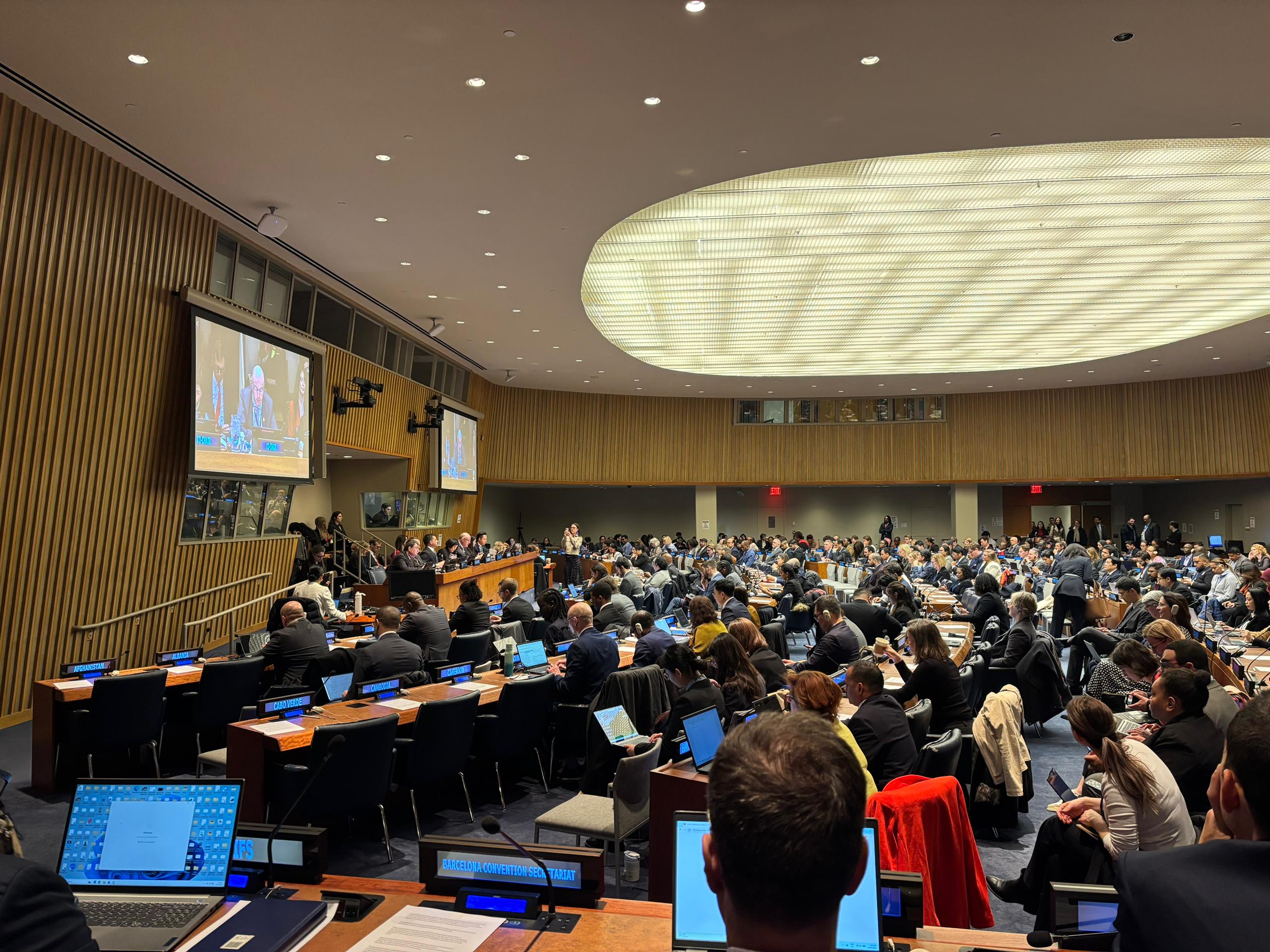
Negotiations unfolded in CR4 (Photo: Wenwen Lyu)
The workload and working method of PrepCom3
Compared with the previous two PrepCom meetings (see my blogposts on PrepCom1 and PrepCom2) in 2025, PrepCom3 was distinctive in terms of its extensive workload. Parallel meetings took place from day one and lunch breaks were intentionally left unscheduled to allow states to hold informal consultations. The programme of work for the second week was also left open to provide flexibility for discussions on the most urgent and difficult issues.
Three informal working groups continued their work to finalize discussions on the following clusters of issues:
- Governance Issues: Rules of Procedure of the COP (COP RoP); Terms of Reference (ToR) and Modalities of Subsidiary Bodies (SBs); the arrangement for the functioning of the Secretariat, including its seat; cooperation with relevant legal instruments and frameworks and relevant global, regional, subregional and sectoral bodies (IFBs); and reporting requirements.
- Clearing-House Mechanism (ClHM): consolidated draft study on the technical aspects of the operationalization of the ClHM.
- Financial Issues: Financial rules; draft Memorandum of Understanding (MoU) between the COP and the Global Environmental Facility (GEF); ToR for Voluntary Trust Fund (VTF); Draft Decision on Special Fund (SF).
Overall, there was a clear push to clean all documents. This ambition was reflected in the co-chairs’ working method across different topics. In some instances, discussions initially focused on resolving substantive brackets, followed by a systematic review of chapters to complete the reading of the text. Contentious issues were identified swiftly at the end of each session, enabling small-group and closed-door ‘informal informals’ to commence right away. In particular, during the second week, working group sessions were suspended several times in the mornings to allow delegates to engage in ‘informal informals’ and explore potential landing zones on the most contentious issues. Plenary sessions then reconvened in the late afternoon to report on progress and outline arrangements for the following day.
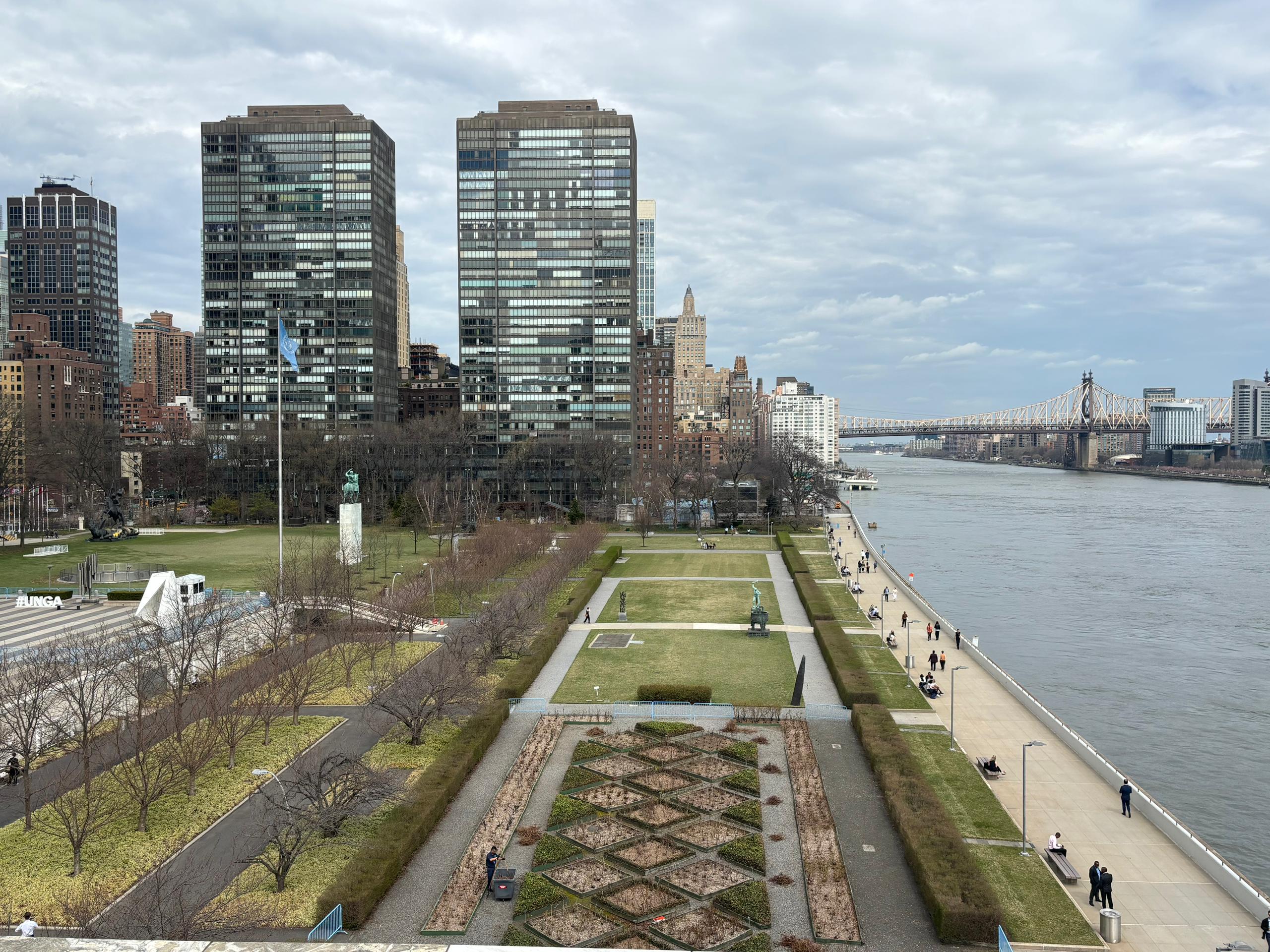
With the final two days mainly dedicated to closed-door informal informals, I took the opportunity to step away from the conference rooms for some fresh air (Photo: Wenwen Lyu)
Stocktake of PrepCom3
The following graph illustrates the progress achieved over the past two weeks across three clusters of issues (governance issues in green, ClHM in orange, and financial issues in purple), as well as the key issues to be resolved in the future.
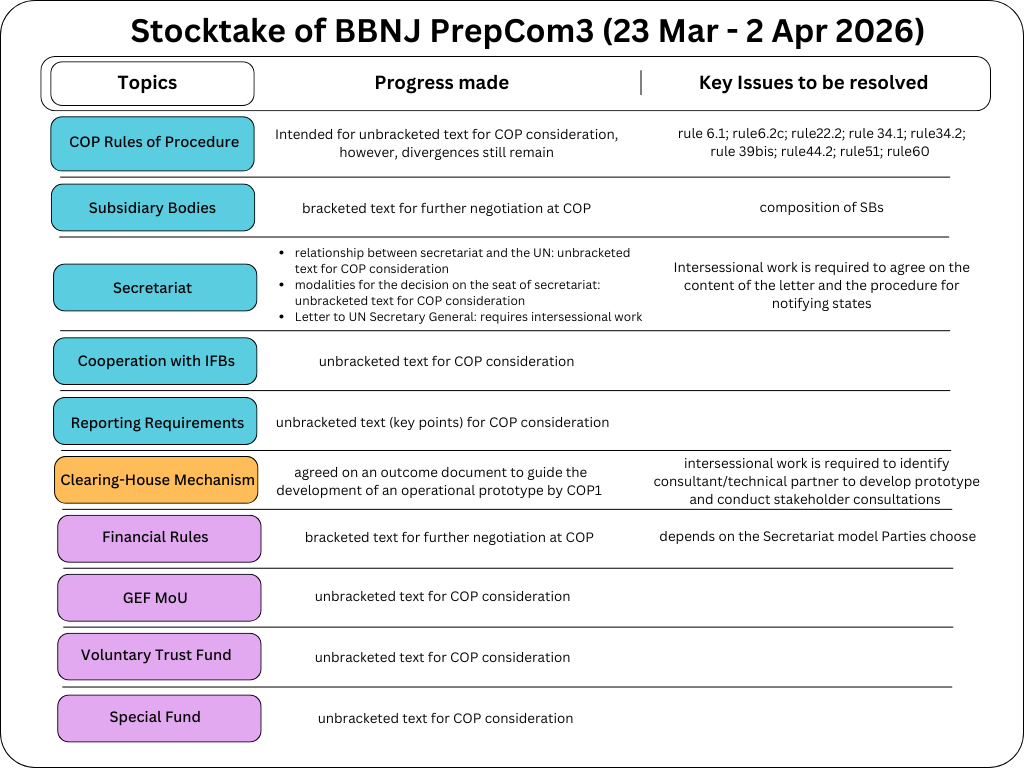
Stocktake of BBNJ PrepCom3 (based on the author’s own observations)
According to the co-chairs, documents on different topics addressed under three clusters will be included in the annex to the PrepCom’s final report to COP1. The documents resulting from PrepCom3 can broadly be organized into three categories (it should be noted that, as the official final report has not yet been published online, these categories are based on the author’s own observations):
Category 1: programme of intersessional work, including:
– Clearing-House Mechanism;
– the arrangement for the functioning of the Secretariat, including its seat, particularly the draft letter to UN Secretary General.
Category 2: documents with bracketed texts, including:
– Financial Rules (as the Secretariat model has not yet been decided);
– Terms of Reference and Modalities of Subsidiary Bodies (SBs) (due to disagreement on the composition of SBs);
– Rules of Procedure of the COP (due to divergent views expressed by delegates on several issues).
Category 3: clean documents without brackets, including:
– Draft decision concerning the relationship between the Secretariat and the UN;
– Modalities for the decision on the seat of the Secretariat;
– Draft decision on arrangements to enhance cooperation with relevant IFBs;
– Key Points for Reporting Requirements;
– GEF MoU;
– Draft ToR for Voluntary Trust Fund;
– Draft decision concerning the operationalization of the Special Fund.
The ambition behind PrepCom3 was to finalize all documents on institutional design within its remit and deliver them to COP1 for adoption, thereby allowing the COP to move beyond institutional design and concentrate on the implementation of the BBNJ. As the Co-Chair noted, ‘The first COP will have more than enough to do…Our responsibility as a preparatory commission is to reduce the workload and burdens on the COP, not to add to them.’
PrepCom3 ended up finalizing 7 out of 10 documents (excluding those designated for intersessional work). While this outcome is already impressive, it still fell short of the benchmark set at the outset. In particular, it left core governance issues such as COP RoP and the composition of the SBs unresolved. This raises the possibility of delays in establishing essential governance bodies for BBNJ, creating significant uncertainty. Furthermore, the emergence of political red lines from states toward specific provisions within the COP RoP at the end of the session introduced additional tensions in the room. Unsurprisingly, a sense of disappointment was expressed by several regional groups.
Governance Issues: The Missing Piece(s)
Many would agree that the COP RoP (A/AC.296/2026/1) is the most important and difficult topic in the negotiations. At the last session, a clean version was presented to delegates, with Singapore and New Zealand proposing new texts as coordinators of the informal informals on ‘observers’ (rule 6.2(c)) and ‘regional economic integration organization’ (rules 34.2 and 44.2), respectively. However, this was accompanied by the registration of disagreements from several states on a range of rules, including rule 6.1 on observer categorization; rule 6.2(c) on a non-objection procedure for observer participation; rule 22.2 on the composition of the Bureau; rule 34.1 on quorum; rules 34.2 and 44.2 on voting rights of regional economic integration organization; rule 39bis on the application of Article 18 of the Agreement; rule 51 on secret ballot; and rule 60 on amendments to the COP RoP.
Since consensus on a clean text is required, these statements created tensions and uncertainties in the room and left the COP RoP bracketed. This is especially concerning because the divergences over these rules are not new. If delegates cannot resolve these long-standing divergences within these two weeks, can they resolve them at the COP1?
The other missing piece is the issue of Subsidiary Bodies (SBs) (A/AC.296/2026/3). The negotiations were based on a single document covering all SBs, with cross-cutting provisions as well as provisions specific to each. The goal of this PrepCom was clear: to have all five SBs up and running at COP1. Accordingly, priority was given to discussions on membership, including the number, composition, election criteria, and qualifications of SB members.
Efforts were made to streamline the text by removing SB-specific modalities and focusing on cross-cutting issues. The importance of enabling the SBs to convene at COP1 was repeatedly emphasized. However, even with informal informal consultations, parties could not reach consensus on the SBs’ composition. Although the selection process itself is unbracketed, and a proposal for interim nomination arrangements of SB members attracted support in the final working group session on this matter, it remains unclear how nomination could happen intersessionally without agreement on composition.
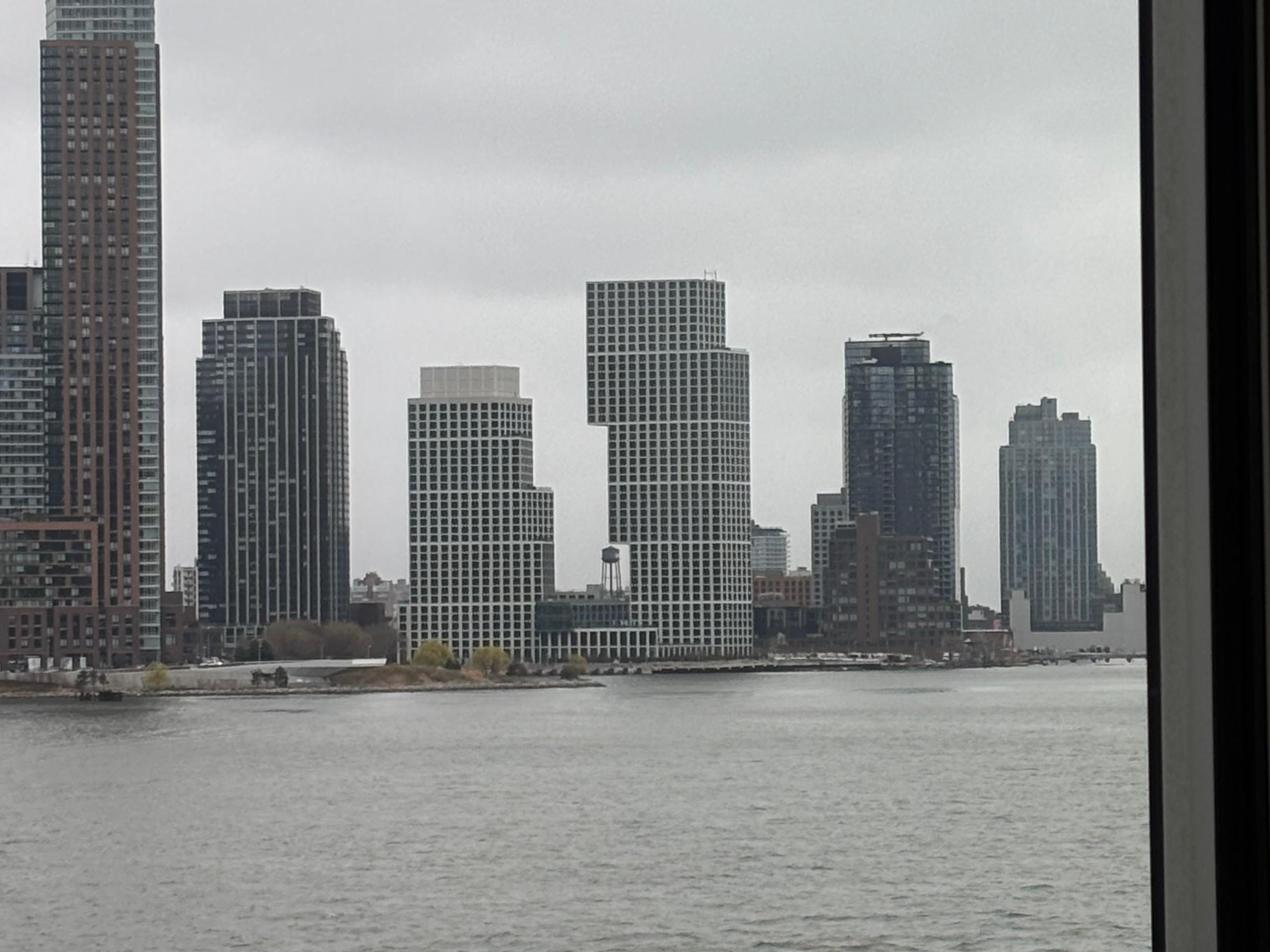
Looking out from the East Lounge at the UN, these two buildings serve as a visual metaphor: separate puzzle pieces that must click into place to form powerful ‘institutional engine’ (Photo: Wenwen Lyu)
The Core Latin American Members (CLAM) raised concerns about the political accountability of the head of the Secretariat to the COP under the UNFCCC model. In this model, the head would be selected by the COP but formally appointed by the UN Secretary General. The final draft decision leaves the selection and appointment process for further elaboration. This process is expected to benefit from responses to a letter to the UN Secretary General containing relevant questions, which will be sent during the intersessional period.
Three Candidates to host the Secretariat
One notable feature of PrepCom3 was that three candidates to host the BBNJ Secretariat – Belgium, Chile, and China, presented their bids during the plenary session. The competition among these countries, representing different regions as well as broader interests in the BBNJ process, was regarded as a positive sign for both the Agreement and multilateralism more broadly.
While Belgium reflects strong ocean science capacity and diplomatic experience as a potential home for the Secretariat, Chile and China signal the growing presence and influence of the Global South in high seas governance. China further committed 70 million USD for the Secretariat set-up and 3 million USD to the Voluntary Trust Fund. Delegates were also given the opportunity to pose questions to the candidates, highlighting several key considerations, including the management model for ClHM, data accessibility and security, visa arrangements, connectivity, and the level of financial support provided by the host country.
The final selection will take place at COP1. A proposal from the European Union on the modality for selecting the seat gained support. Under this proposal, the decision will first be sought by consensus. In the absence of consensus, a secret ballot vote will be held, with two thirds of Parties present and voting required. If a two-thirds majority does not emerge for any candidate after the first round of voting, successive rounds will be held, with the candidate receiving the fewest votes eliminated after each round, until only two candidates remain and one receives a two-thirds majority.
The Clearing-House Mechanism: A Crucial Step Forward
The negotiations on the Clearing House Mechanism (ClHM) were based on a draft study on the technical aspects of its operationalization. The study provides comprehensive information on design options, technical requirements, a roadmap, as well as estimated timelines and costs. The discussion started in the first two days with two rounds of lunchtime consultations with the consultants who authored the study. Beyond the technical aspects, a key question was what this PrepCom should deliver in order to take a concrete step towards establishing a functional ClHM to support BBNJ implementation, which officially began in January.
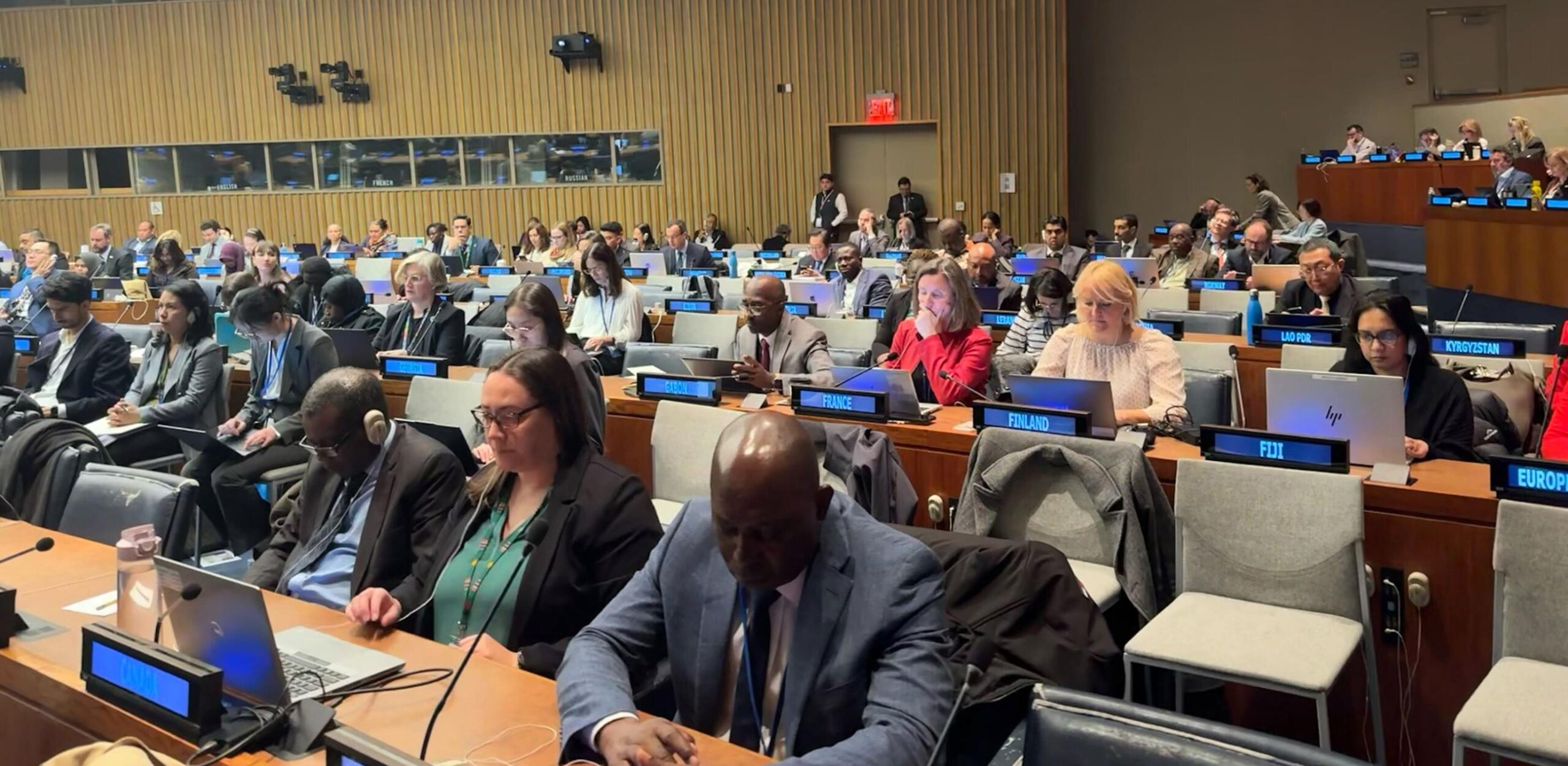
Delegates during the discussions on modalities for the operation of the CHM (Photo: Earth Negotiation Bulletin)
As a phased approach to develop ClHM is supported, attention moved to what could be delivered at this stageRegarding technical deliverables, IOC proposed an 18-month pilot phase with a functional prototype of the ClHM ready by COP1, followed by a testing and validation phase delivering a fully operational ClHM by COP2. IOC also committed to conduct stakeholder consultations during the pilot phase. In terms of governance of the ClHM, IOC proposed developing and maintaining the technical infrastructure under a cooperation arrangement, with decision making resting with the BBNJ COP in all matters. IOC governing bodies would only review the financial implications and workload. In this proposal, the ClHM would be funded by BBNJ.
While there was general appreciation for IOC’s offer, several uncertainties remained. These include: what parameters are needed to guide a potential technical partner? What should the relationship between the technical partner and the COP be? How should the intersessional consultation process be operationalized, and what roles should the co-chairs and DOALOS play? How can it be ensured that the ClHM prototype does not lock in design and governance choices that should ultimately be decided by the COP? A further concern is how to steer the ClHM in the right direction from the outset, in order to avoid a situation where the COP later needs to reverse design choices, which might entail significant costs.
The informal informal consultations led by Palau and New Zealand made progress on these issues. The outcome document from these discussions outlines the intersessional work, including:
• the development of a prototype with key functions by COP1;
• the invitation of expression of interest to provide technical support for the design and development of the prototype, taking into account DOALOS’s advice on timeframe;
• a consultation process with the technical partner under the oversight of the co-chairs, Bureau, and DOALOS;
• deliverables from the technical partner;
• and agreed parameters to guide its work.
As the BBNJ’s data infrastructure, the ClHM is regarded as the ‘beating heart’ of the Agreement. In its design, careful attention must be paid to the broader implications of design choices, including who designs it, the choice between a centralized system and a system with regional nodes, the distribution of physical infrastructures, and the application of new technologies, as well as their impact on equity, data security, data accessibility, and data ownership. These are not merely technical considerations but deeply entangled with political interests and concerns. While discussions on the ClHM at PrepCom1 and 2 were still largely framed in technical terms, PrepCom3 has made clear that the design process is inherently political (see analysis of different data rationales in
Financial Rules and Mechanisms: A Surprise Amidst Disappointment
There are four documents on financial issues which constitute another major negotiating cluster. In addition to the general financial rules (A/AC.296/2026/2), three draft decisions were negotiated for the funds established under the Agreement: the GEF MoU (A/AC.296/2026/7), the ToR for the Voluntary Trust Fund (VTF) (A/AC.296/2026/5), and the operationalization of the Special Fund (A/AC.296/2026/6), including the ToR for an ad hoc committee annexed to the decision.
By the end of the negotiations, the financial rules were still bracketed, pending agreement on the secretariat model, while the other three documents were finalized and cleaned. This progress injected a degree of positive momentum, and even some surprise, amidst the broader sense of disappointment. ‘Informal informals’ were convened to reach consensus on several particularly challenging issues, such as the role of the finance committee, the content of the GEF report, the scope of the VTF regarding eligible meetings and the cap on the number of recipients from developing countries, and the composition of the ad hoc committee tasked with preparing the constitutive document for the Special Fund at COP2. The difficulty of these negotiations cannot be overstated. Nevertheless, the progress achieved under the financial cluster demonstrates that consensus is possible when there is a strong willingness to compromise and an openness to identifying mutually acceptable landing zones.
Reflections: what can we expect from intersessional work?
If the outcome of PrepCom3 is assessed against the benchmark set at the outset, it is difficult to characterize it as a success. While delegates expressed disappointment with the outcome, they also conveyed strong appreciation for the diligent efforts of the co-chairs and DOALOS. The political trust built over two decades of negotiations, further reinforced through the three constructive PrepCom meetings, remains a strong asset. Intensive intersessional work, undertaken in the utmost good faith, will be essential to address the disappointment and to carry this trust forward into COP1 with renewed confidence.
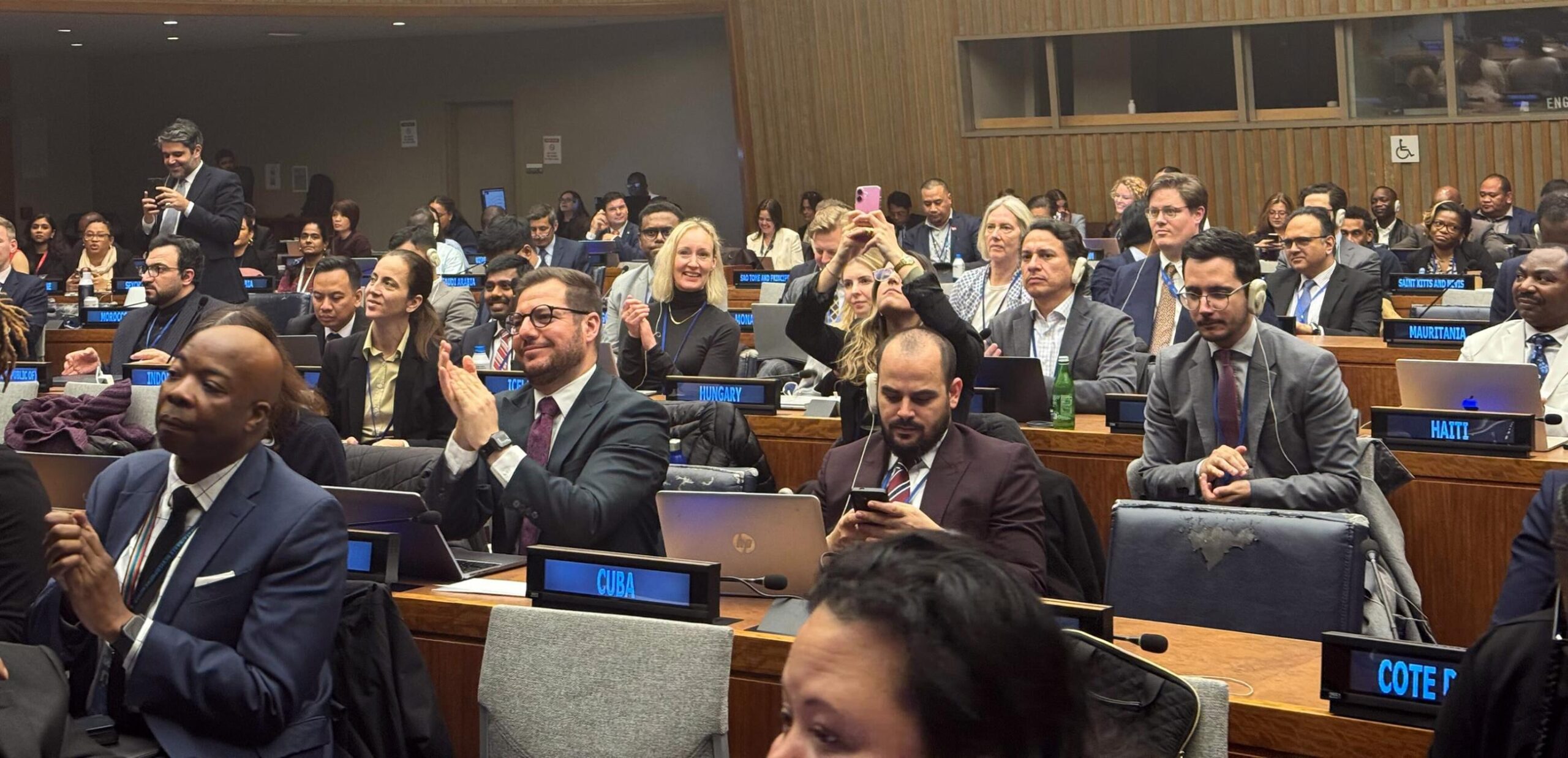
Delegates applaud at the conclusion of PrepCom III (Photo: Earth Negotiations Bulletin)
Based on my observation, the priorities of intersessional work may include but not limited to:
• Whether and how to enable the nomination process for members of the SBs;
• Finalize the letter to the UN Secretary General regarding the arrangements of the Secretariat and develop a procedure to notify States of the responses received;
• Launch the process for inviting expressions of interest from potential technical partners to develop a prototype of the CLHM, select the technical partner, and enable an intersessional consultation process with the selected partner under the oversight of the Co-Chairs and the Bureau;
• Whether and how to enable the nomination process for an ad hoc committee for the special fund;
• Prepare a budget proposal for COP1.
As AOSIS put it in its closing statement, ‘Weeks of negotiating time that the biodiversity crisis simply cannot afford — and we leave with less progress than the moment demanded.’ There are now around ten months left until the first COP, yet the Agreement already entered into force in January, and activities are taking place under its mandate every day. While it is important to design an effective and equitable institutional framework, it is also time to look ahead and consider how the institutions will operate in practice to ensure the achievement of the BBNJ’s objectives.