From 20-24 October, representatives from the 196 members of the Convention on Biological Diversity (CBD) met in Panama City for the 27th meeting of the Subsidiary Body on Scientific, Technical and Technological Advice (SBSTTA) to hold discussions in preparation of the next Conference of the Parties, scheduled for autumn 2026. Although established as a scientific advisory body to the COP, the SBSTTA discussions turned surprisingly political and intense in this week of negotiations. After a long and intense week, states were able to agree: but on what?
Written by Hristina Talkova
This activity is conducted as part of the Collaborative Event Ethnography (CEE) under the TwinPolitics project, led by Prof. Alice Vadrot and funded by the European Research Council. Other venues include the BBNJ Negotiations, negotiations for a global Plastics treaty (INC) and those of the International Seabed Authority.
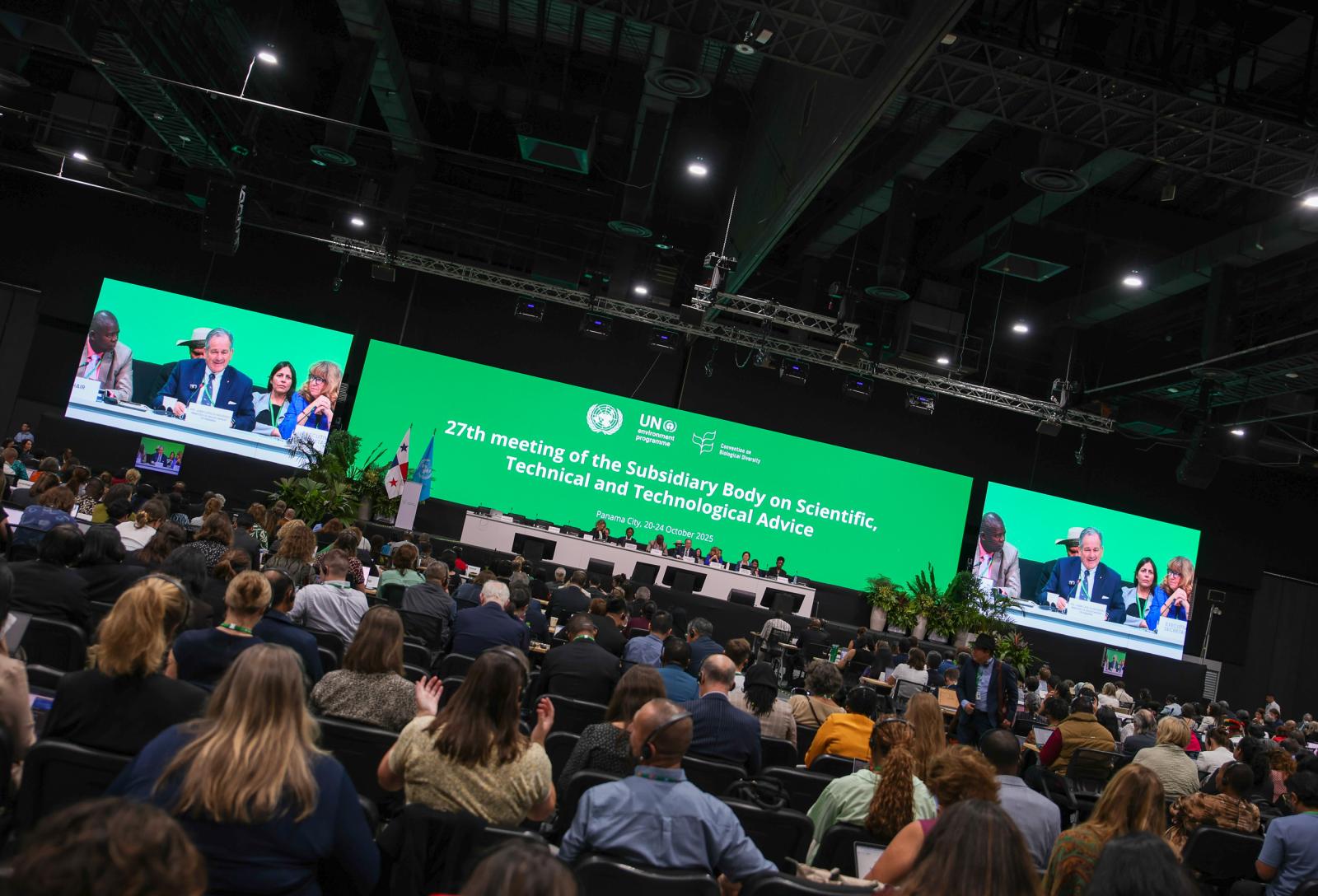
Photo by IISD/ENB | Mike Muzurakis
International biodiversity politics: “The world expects results, not more excuses”
Exemplified by a number of recent multilateral environmental negotiations, climate, biodiversity and conservation politics currently rank high on the international political agenda (for detailed reports on the BBNJ, ISA and Plastics Treaty negotiations see the links above). The Convention on Biological Diversity (CBD), a nearly universally ratified international treaty (the U.S. being a notable exception) governs the preservation of biodiversity, the sustainable use of components of biological diversity and the fair and equitable sharing of the benefits arising from the utilization of marine genetic resources (Article 1 CBD).
States actively engage in finding ways forward to combat biodiversity decline within the framework of the convention, which is today more relevant than ever. As the Executive Secretary of the CBD Secretariat, Astrid Schomaker noted at the opening of this SBSTTA session: “We must acknowledge that biodiversity loss and climate change are the defining challenges of our era and must be tackled in tandem”.
On the first day, the Panamanian Minister of the Environment made an opening remark that struck a nerve when he noted that: “We are not here to hide behind speeches anymore”, emphasising that time has already run out and that expressive actions, solutions and concrete agreements are of the utmost importance. His key message was that: “The world expects results, not more excuses” from international negotiations. Delegates then proceeded to formal negotiations, with the overall aim of providing clear guidance on scientific and technical needs for the crucial strategic review ahead of COP17.
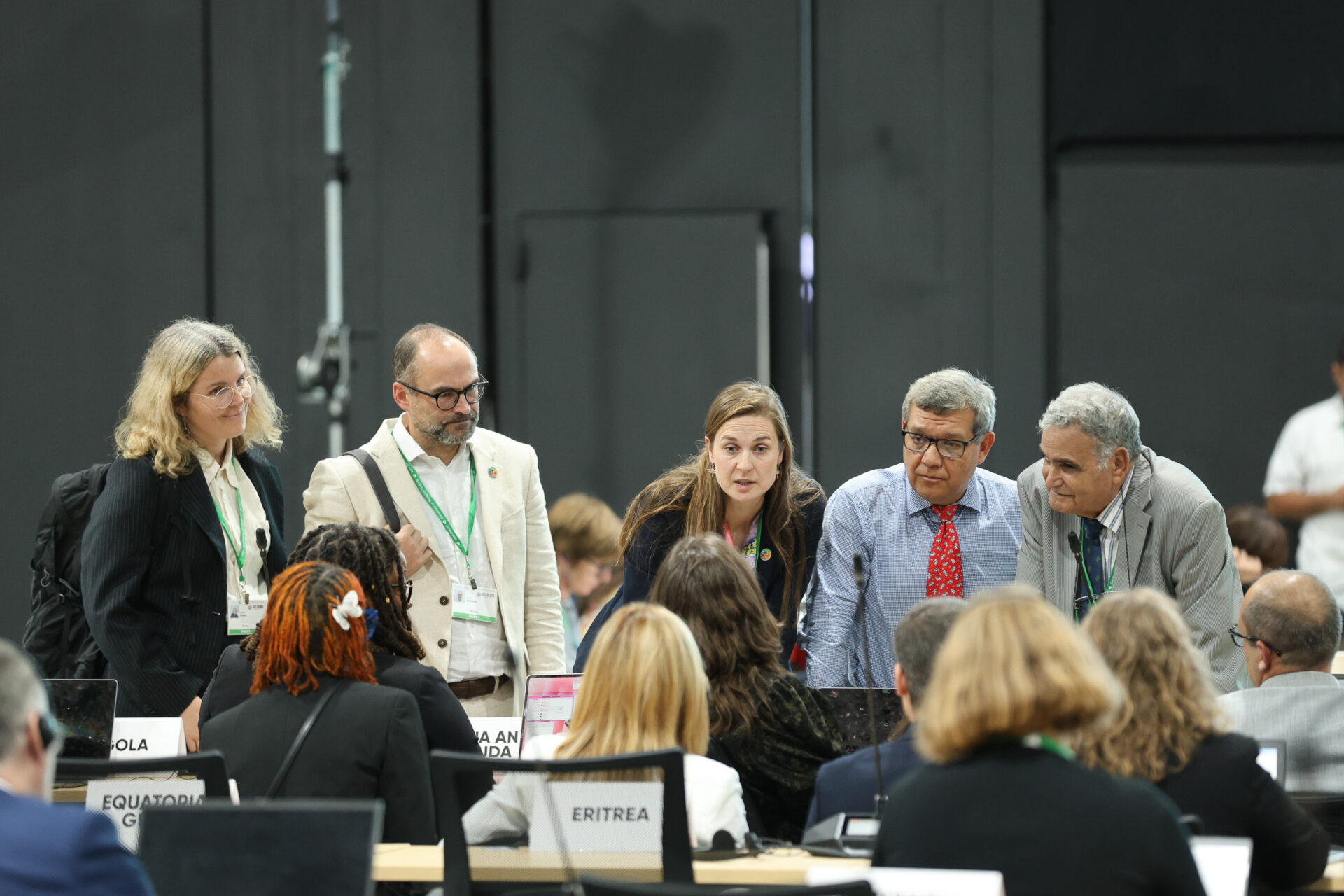
Photo by IISD/ENB | Mike Muzurakis
SBSTTA 27: Main objectives and takeaways
In 2022, the Kunming-Montreal Global Biodiversity Framework (GBF) (CBD/COP/DEC/15/4) set ambitious political goals and targets to combat the “continued loss of biodiversity and the threat that this poses to nature and human well-being”. The GBF is the latest effort by the CBD following two previous rounds of largely unmet targets. Despite the perceived urgency, it took more than two years to formally agree on the implementation process. During that of uncertainty on the implementation, progress on the targets was naturally lacking. The adoption of the GBF monitoring framework (CBD/COP/DEC/16/31) in February 2025 was broadly considered a positive step forward, however states are still under a tight timeline.
With some GBF targets still left open, the first round of country reports due in February 2026 aims to serve as the basis of the upcoming global review. For that purpose, CBD members discussed the best way to agree on the annotated outline for a global report (see also CBD/COP/DEC/16/32), which was the main focus of the session. While generally agreeing on the essence of the report, states had differing views on what should be included. Building on an initial consensus, contact groups were formed early on to smooth out differences outside of the plenary session.
Among other aspects, delegates addressed that the global report should highlight effective measures and successes in addition to challenges, consider the extent to which global targets are addressed in national targets and should overall reflect an analysis of collective progress, including a summary on the state of implementation of each GBF target based on headline and binary indicators. However, some states stood firm on their position that the nature of the report should be non-intrusive and non-punitive to respect national sovereignty. These members stated that it should be avoided placing an undue burden on CBD members, in particular developing countries. For that purpose, the status of implementation of individual states should not be underlined in the report. The question remains whether this approach will bring a fruitful global review. By keeping the global report “non-prescriptive” in its findings, it remains to be seen if implementation issues can be adequately addressed.
Financial restraints, different delegation sizes, as well as many consecutive parallel meetings with limited breaks were listed as recurring issues during the week. Additionally, the challenges in producing the upcoming national reports were noted and potential delays in submissions were prognosed. These, however, should not reflect a lack of commitment from states, but instead are the result of structural and financial limitations. Duplicating efforts across different international fora is another additional burden: discussions also revolved around avoiding the proliferation of indicators, partially suggesting to further postpone discussions on the GBF indicators.
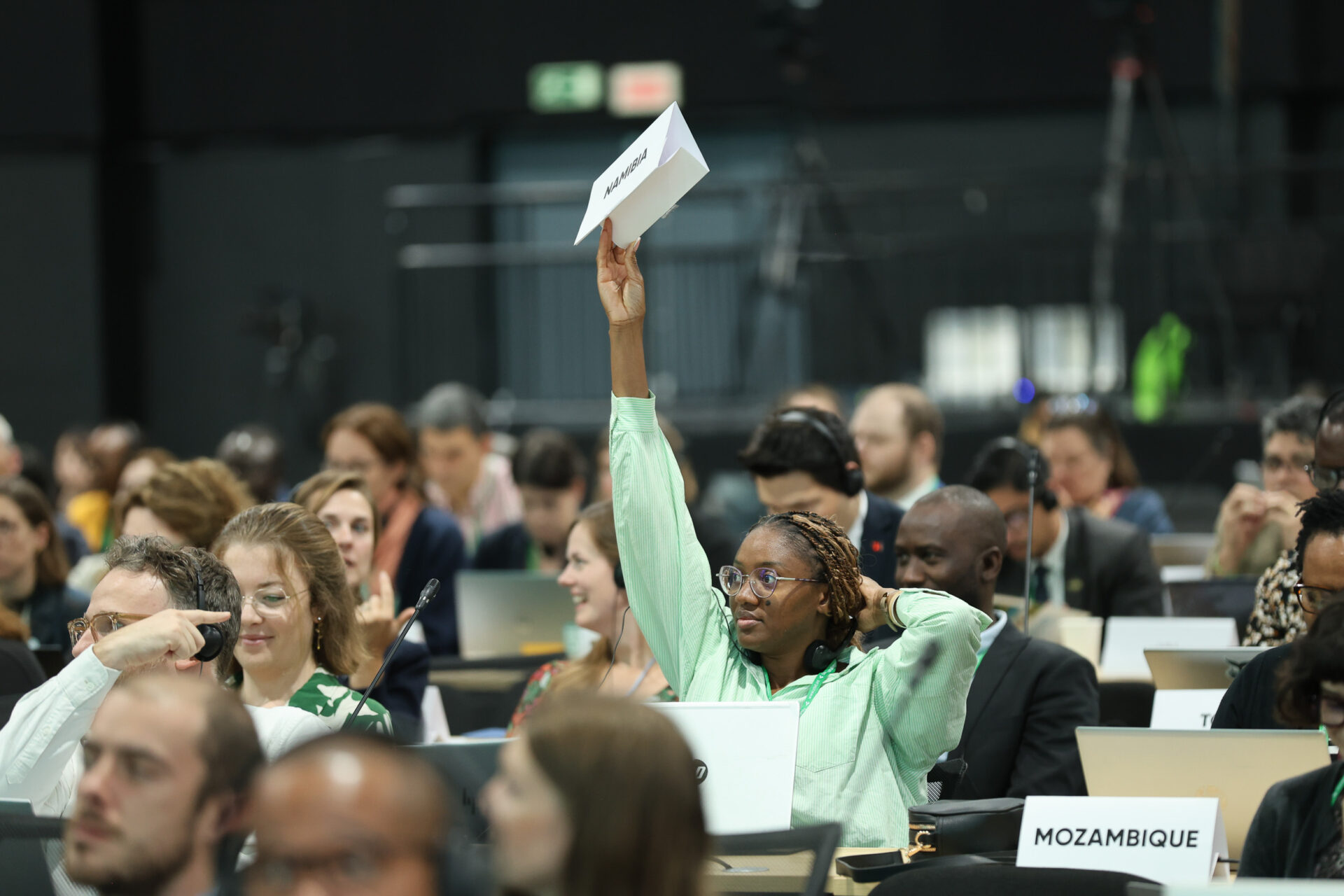
Photo by IISD/ENB | Mike Muzurakis
On a collision course: political or scientific discourse?
The high ambition visible on the first day of the session was not maintained throughout. Despite the aim of addressing urgent challenges, the negotiations quickly became contentious, leading to a delay in the discussion of important agenda items and the formation of solution-oriented contact groups. Although it was created to provide scientific, technical and technological advice, this plenary seemingly veered away from its mandate by engaging in wordplay, discussing UN protocol and language, and citing each other’s international obligations to uphold the treaty’s objectives and not hinder the progress of discussions. While remaining highly relevant and necessary, this SBSTTA meeting seemed to mirror negotiations at a COP instead of those at a scientific body.
Some delegates indicated postponing the consideration of indicators to 2027, expressing concerns over the availability of financial and human resources. Others raised the question of the nature of these considerations, and whether this is the right forum to hold this debate. The hard line was clear: “no reopening discussions on agreed language or timeline by the COP, nor negotiation on new targets”. This is one of several examples where negotiations strayed from a strict scientific or technical perspective.
However, SBSTTA has been partially known to steer away from its direct objective on how to best address biodiversity-related issues through scientific means since its inception (Vadrot 2018: 214). Instead of sending a scientist or technical expert to one of its first meetings, some delegations chose to instead send high level diplomats (ibid). This was picked up by other states and quickly politicized the discussions, which is also put in conjunction with the need for establishing the Intergovernmental Science-Policy Platform on Biodiversity and Ecosystem Services (IPBES) (ibid).
References to IPBES and its work are inevitable at SBSTTA meetings, particularly as delegates urge the CBD process to be complementary to others while still remaining true to its purpose. As such, IPBES’ work and its ongoing assessments tend to be quite interwoven in discussions. References to IPBES became particularly politicized at this SBSTTA meeting, with some delegations even wanting to delete them completely from SBSTTA’s output.
Some delegations were more supportive, particularly on wanting to welcome the two upcoming methodological assessments that IPBES is currently undertaking; the first on monitoring biodiversity and nature’s contributions to people, and the second on integrated biodiversity-inclusive spatial planning and ecological connectivity. Iceland also positively announced that it has recently joined IPBES as its 149th member. Diverging views remained, however. While delegates overall saw the work of IPBES as being undeniably important, its growing scientific and technical role in relation to the CBD was considered by some to be “distorting the function of SBSTTA.”
Although conducting research and collecting field notes remotely surely cannot capture the negotiation dynamics on site, online CEE (for more on the research method see additional reading below) still offers an immensely valuable insight into state-to-state interactions. As part of further research on the GBF monitoring framework, the data collected during this session will be analysed alongside an existing dataset collected by TwinPolitics researchers in the course of my master thesis project. While some contact group sessions were closed for online observers, plenary discussions remained open and allowed for seamless data collection.
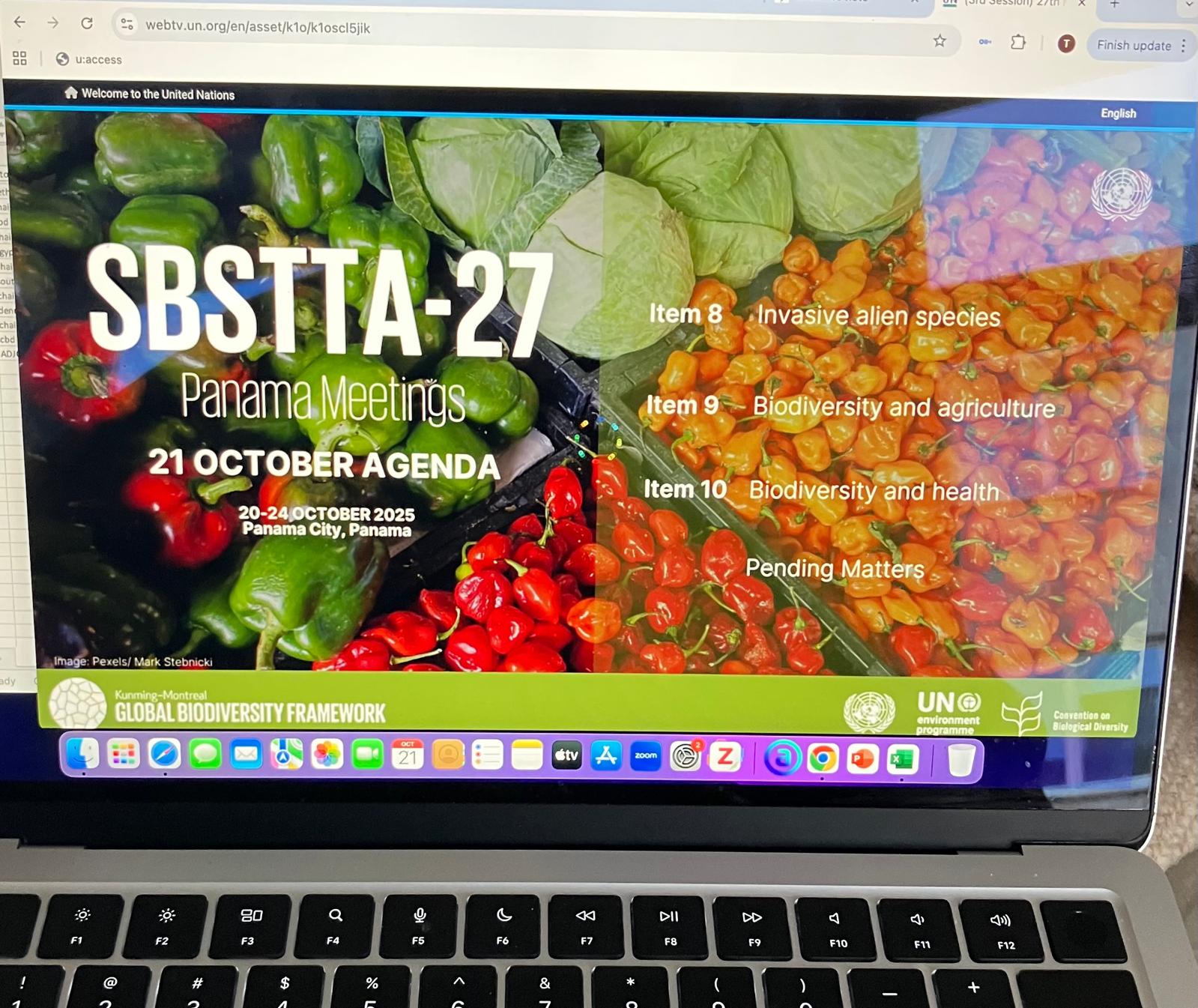
Photo credit: Hristina Talkova
Side note: First meeting on the subsidiary body related to indigenous people and local communities
Another aspect which was not directly part of my research and fieldnote collection was that the CBD has just undergone a debut process for a new subsidiary body on “Provisions Related to Indigenous Peoples and Local Communities” (SB8j). This third subsidiary body of the CBD COP was holding its first meeting adjunct to the SBSTTA session. While not the first of its kind in terms of attempting the broader inclusion of traditional and Indigenous knowledge, widespread involvement of such actors is still under-developed at international treaty fora. This makes its successful first meeting even more relevant. States discussed the working modalities of SB8j, and recognized that Indigenous knowledges, sciences, and practices continue to evolve.
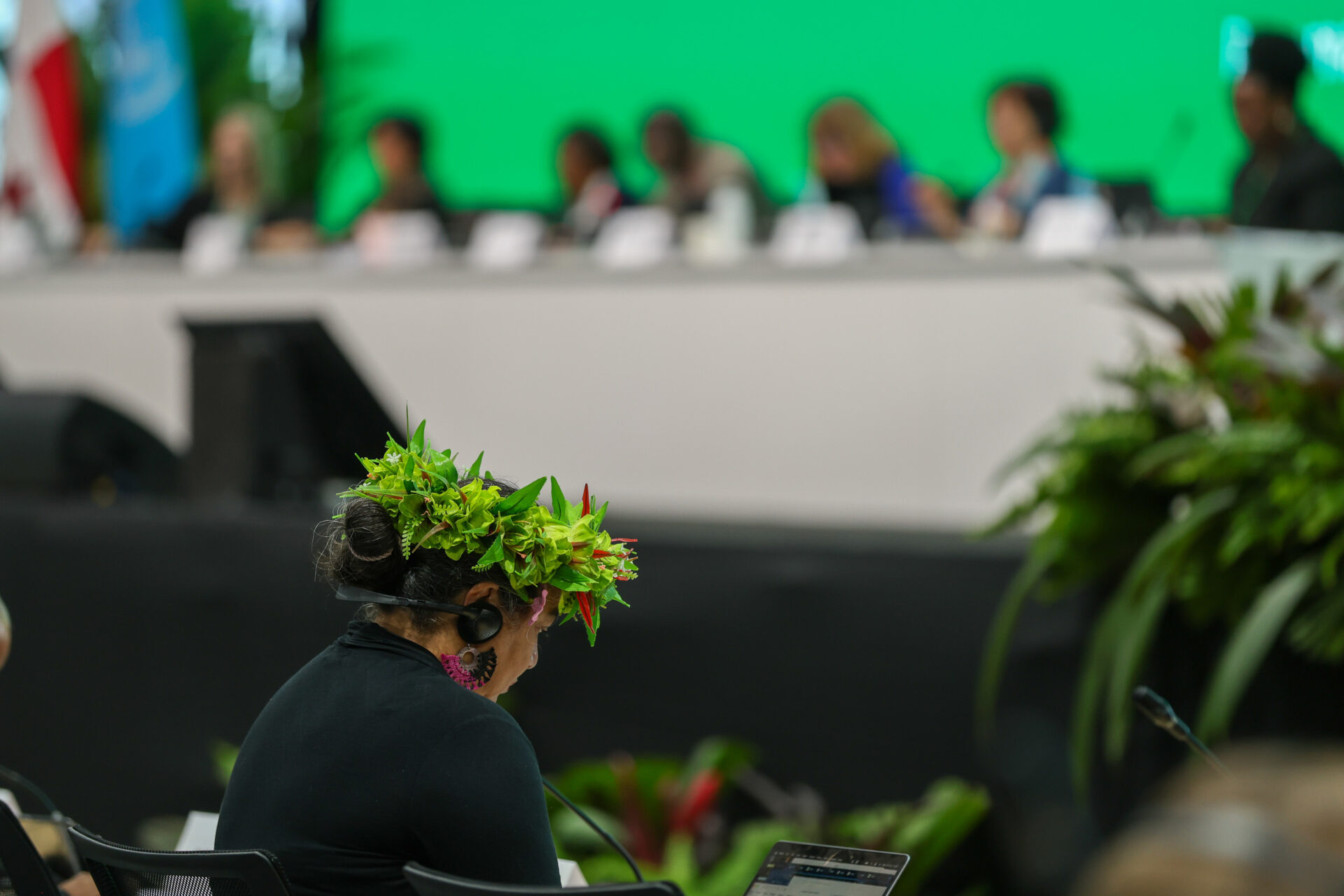
Photo by IISD/ENB | Mike Muzurakis
Next steps for the intersessional period
The agenda of these two meetings was fully packed, with delegates willing to work up to late in the evenings to progress on items. It became apparent early on while conducting the fieldwork that the time seemed to be passing by in an instant, and that the agenda was too ambitious for the allocated timeslots. However, pilot testing of new methods of work by the secretariat in using technology to optimise the working process set hopes for the future. Some issues on the implementation seem to remain open and upcoming intersessional meetings will aim to resolve them before the high-level discussions at COP17.
Despite being subsidiary bodies with specific focus, such as scientific and technical advice, or implementation, the political level of intersessional negotiations is extremely high. Delegates largely consider what will need to be decided at next COP, aiming to give the best possible advice going forward. Even with open questions remaining, the national country reports due in 2026 will form the basis of the upcoming GBF global review. During further intersessional meetings at SBI6 in February 2026, as well as SBSTTA28 and SBI7 in July/August 2026, delegates hope to progress sufficiently for informative discussions to take place at COP17 in October 2026. The success of the conference is closely tied to the joint commitment of states to further their national capacities, which is tied to challenges beyond the scope of the negotiations.
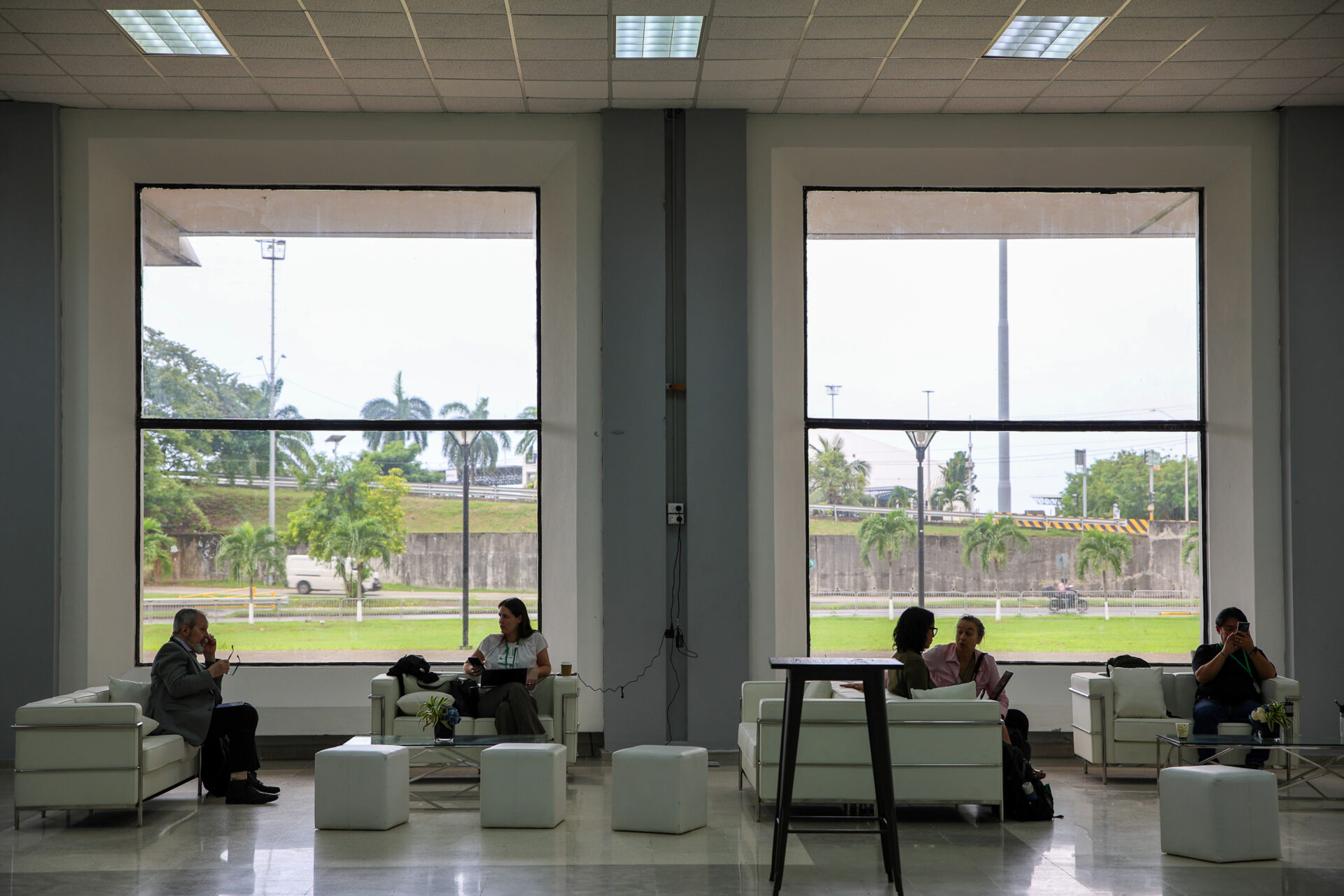
Photo by IISD/ENB | Mike Muzurakis
Additional reading:
Ruiz-Rodríguez, Silvia C., & Vadrot, Alice B.M. (2025). Negotiating marine protected areas across knowledge systems: Multilateral boundary work in practice. International Affairs, 101(3), 879–902. https://doi.org/10.1093/ia/iiaf004
Vadrot, A. B. M. (2018). Endangered species, biodiversity and the politics of conservation. In Kütting and Herman (eds.) Global Environmental Politics. Concepts, Theories and Case Studies, London & New York: Routledge, 198-226.
Vadrot, A. B. M., Dunshirn, P., Fellinger, S., Langlet, A., Ruiz-Rodríguez, S. C., & Tessnow-von Wysocki, I. (2025). Writing negotiations: Collaborative field note-taking during global environmental meetings. Qualitative Research. https://doi.org/10.1177/14687941251341984