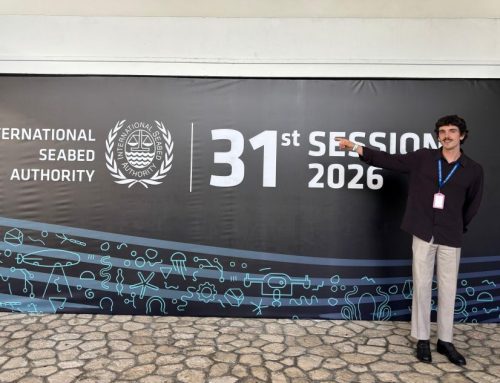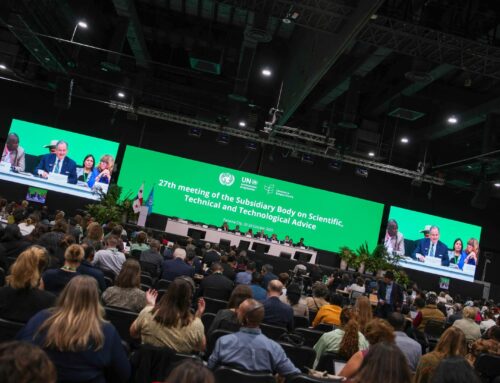
This week, the University of Vienna was granted official observer status at the International Seabed Authority (ISA), based in Kingston, Jamaica. This means that researchers from the University of Vienna can now observe the negotiations on site and contribute to the scientific work through statements.
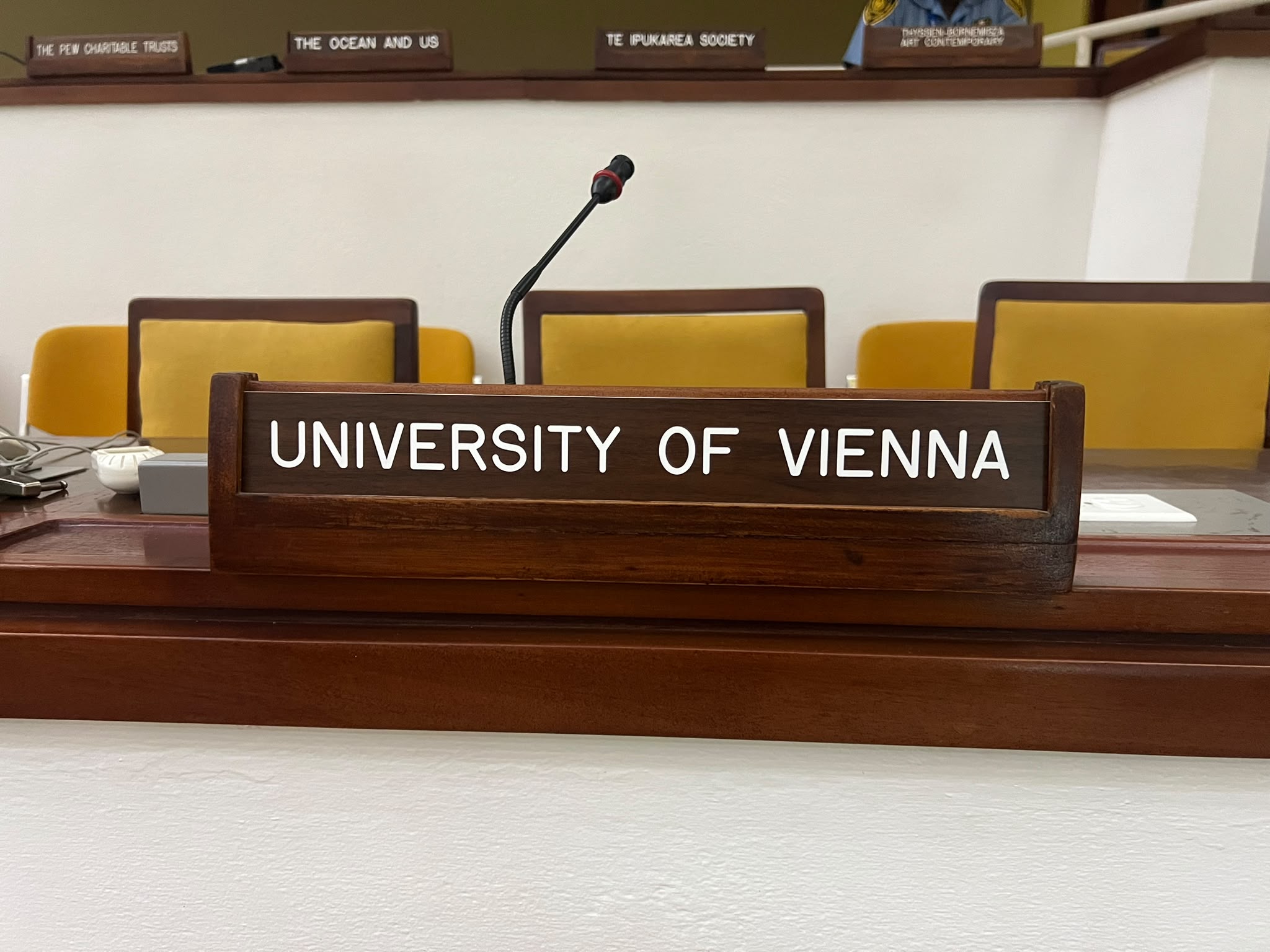
Sign of the University of Vienna (Source: Emil W. Hildebrand)
We have been monitoring the negotiations at the ISA for several years and are examining the emerging ‘Mining Code’ (extraction of mineral resources), as well as issues relating to the use of ocean data and the future of the ISA, as part of TwinPolitics. However, observer status is also relevant for researchers in the fields of biology, geography, ocean sciences and meteorology.
In addition to the ISA, the University of Vienna also holds observer status with, amongst others, the Intergovernmental Science-Policy Platform on Biodiversity and Ecosystem Services (IPBES) and the Convention on Biological Diversity (CBD).
The ISA was established in 1994 under the United Nations Convention on the Law of the Sea (UNCLOS) and has a mandate to manage deep-sea mineral resources globally as the ‘common heritage of mankind’.
These mineral resources include, amongst others, cobalt, copper, nickel, manganese and rare earths, and are of fundamental importance for the production of various electronic products, such as chips and batteries, as well as for steel production. The demand for raw materials from major industrialised nations and emerging powers makes deep-sea mining and the negotiations surrounding a future ‘Mining Code’ a contentious issue in international politics.
You can find our doctoral researcher Emil W. Hildebrand’s blog posts on the ISA negotiations here:
- Big challenges, careful progress, and last-minute drama in deep-sea mining negotiations (April 2025)
- Happy 30th, ISA. Time to rethink your priorities? – A researcher’s report on the International Seabed Authority’s 30th Session (August 2025)
- The International Seabed Authority as a deep-sea data authority (April 2026)