
WP1 models the making of the EU digital twin of the ocean (DTO) and follows its operationalisation on several data collection sites. The methodology will be fine-tuned and research guidelines for all involved research team members developed. Desk research and exploratory interviews will be conducted to identify the main actors and sites for fieldwork. Hybrid ethnography (i.e. participant observation, interviews, and field note-taking) at 3 or 4 DTO-related events and construction and implementation locations will be conducted. The collected data will be stored, interviews will be transcribed, and a preliminary analysis will be conducted. The ethnographic data will be used for socio-technical network mapping and analysis. WP1 will finally visualise EU DTO-making and network relations.
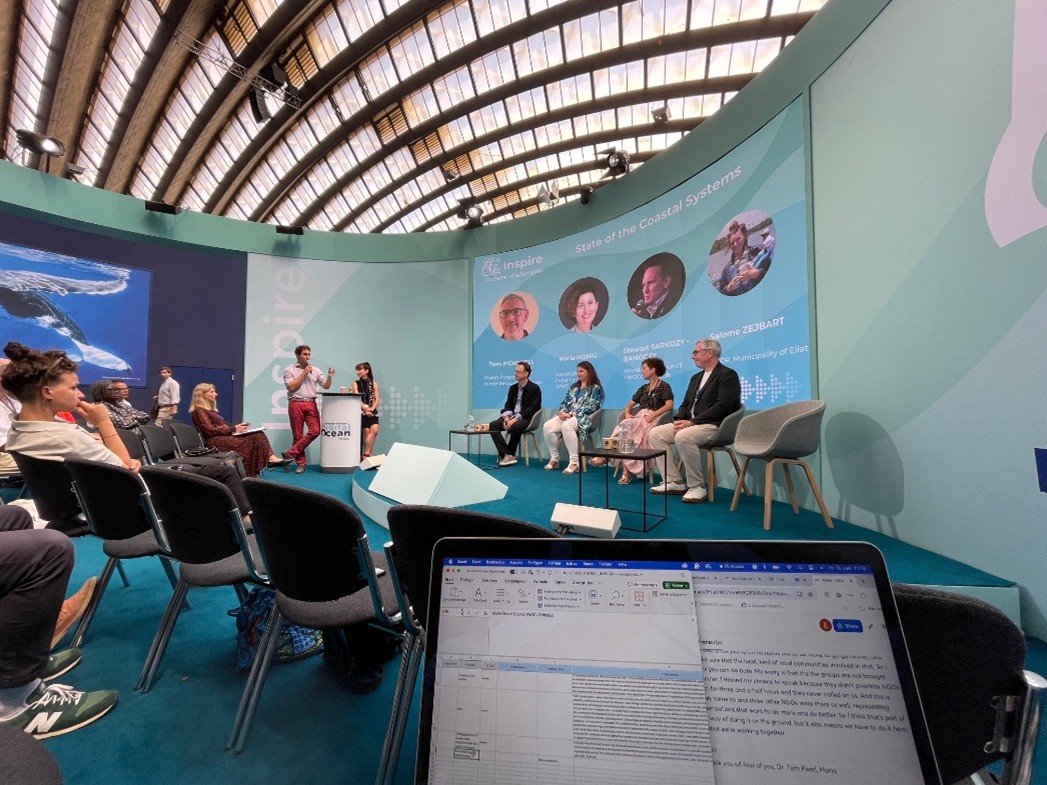
How the field-note taking looked like (source: Carolin Hirt)
Within the context of WP1, Carolin Hirt is writing her doctoral thesis on the politics of digital twins. The thesis challenges techno-optimistic understandings of digital twins as neutral decision-support tools and instead reconceptualizes them as power-laden digital technologies. Using the EU DTO as a case study, the research investigates the implications of digital twins for global environmental politics, the imaginaries surrounding the EU DTO, and draws on fieldwork conducted at the key institutions responsible for its development.